
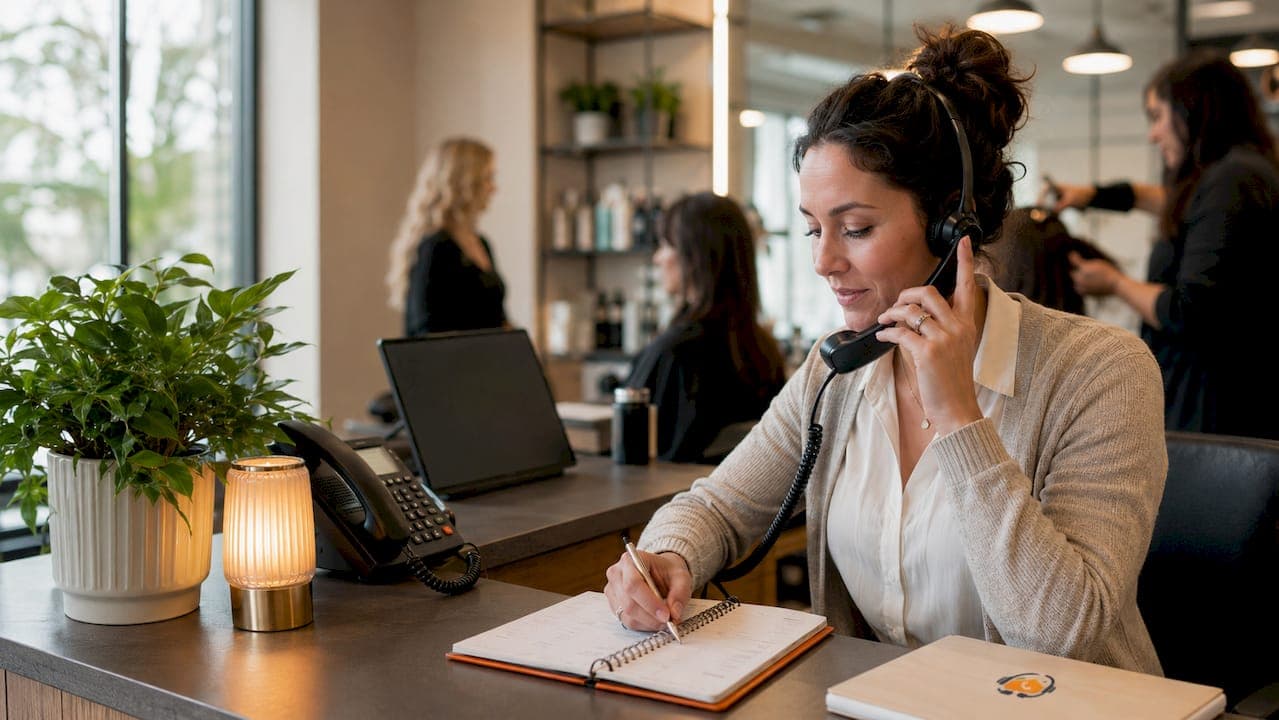
Salon appointment call management is the process of integrating phone, online, and walk-in bookings into a single, reliable scheduling system. The most effective salons combine triage workflows, automated reminders, and clear call etiquette to reduce no-shows, protect revenue, and keep clients coming back. Salons using integrated scheduling see up to 30% more appointments than those relying on phone-only booking. That figure reflects a fundamental shift in how salons handle appointment calls: the phone is no longer the only channel, but it remains the most personal one, and how you manage it defines your client experience.
How salons handle appointment calls: the main methods
The salon appointment process rarely follows a single path. Most salons operate across three channels simultaneously: inbound phone calls, online booking platforms, and walk-in clients. Managing all three without letting any one of them disrupt the others is the core operational challenge.
Phone calls remain the primary channel for complex or first-time enquiries. A client booking a colour correction or a bridal package will almost always call rather than book online. That call needs to be answered promptly, handled with care, and converted into a confirmed appointment with the right stylist, at the right time, with the correct duration blocked out.
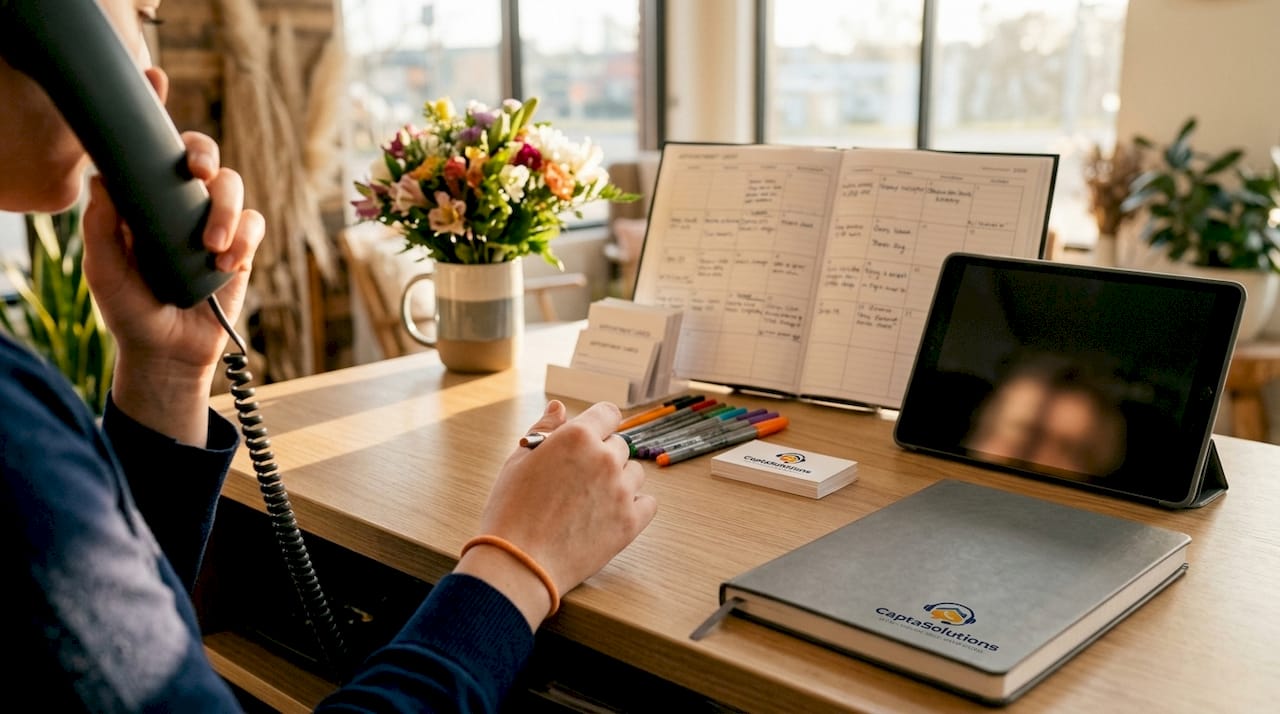
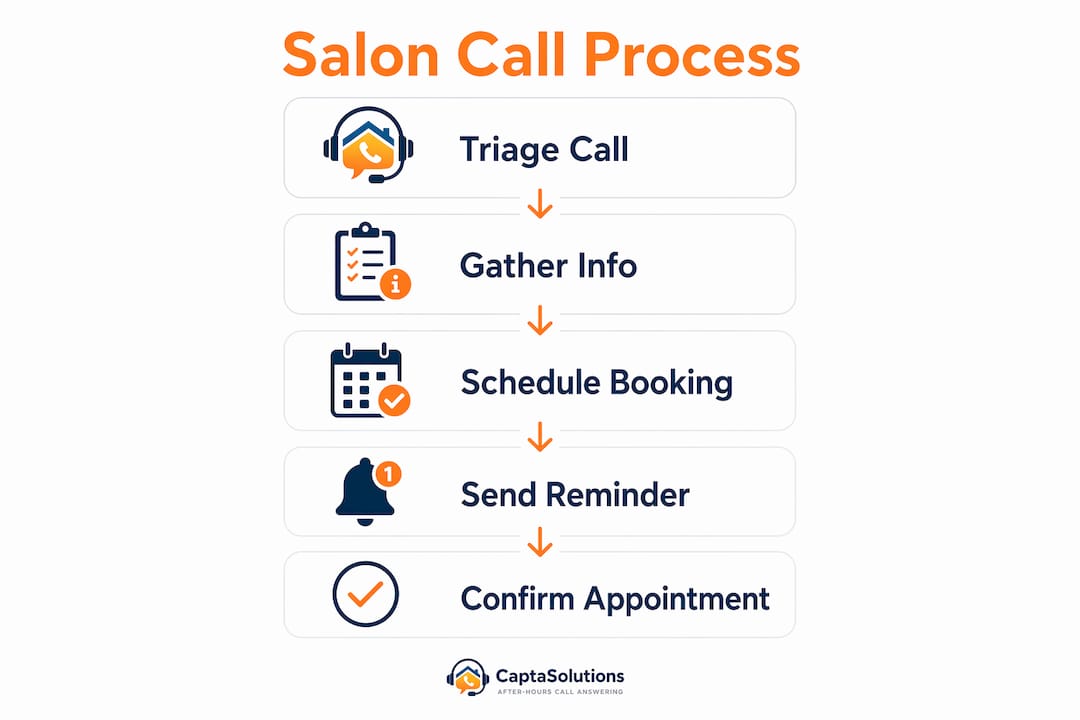
Triage call workflows filter enquiries so that routine bookings are handled quickly, while complex consultations receive proper human attention. The logic is straightforward: a client ringing to book a trim does not need five minutes of a senior stylist's time. A client asking about a full colour change does. Triage separates the two and routes each accordingly.
Walk-in clients add a further layer of complexity. Walk-in windows reserved alongside booked appointments allow salons to accommodate drop-in clients without disrupting the main schedule. Most salons designate specific slots, often early morning or mid-week afternoons, where walk-ins are welcomed without prior notice.
The key methods salons use to manage bookings include:
- Dedicated phone hours: Assigning a specific team member to handle calls during peak periods, rather than pulling stylists away from clients mid-service.
- Online booking platforms: Allowing clients to self-book 24 hours a day, reducing inbound call volume for routine appointments.
- Triage scripts: Short call guides that help reception staff qualify the enquiry, estimate duration, and assign the correct resource in under two minutes.
- Walk-in blocks: Reserved gaps in the schedule that absorb drop-in demand without creating conflict with booked appointments.
Pro Tip: Record the most common call types your salon receives over one week. You will almost certainly find that 60–70% are routine bookings that could be handled online, freeing your team to focus on the calls that genuinely need a human response.
How does technology improve appointment call management in salons?
Technology does not replace the phone call. It reduces the number of calls that need to happen at all, and it handles the ones that do with greater consistency.
Online booking increases appointments and reduces front desk call volume. When clients can book, cancel, and reschedule themselves online up to a defined cut-off time, the administrative burden on reception drops significantly. Staff reclaim time that was previously spent on hold or repeating the same information across dozens of calls per day.
Automated SMS and email reminders reduce no-shows by up to 40%. That is not a marginal improvement. A busy salon losing four in ten booked slots to no-shows is losing a substantial share of its weekly revenue. Automated reminders sent 48 hours and again 24 hours before an appointment address this directly, without requiring any staff involvement.
Resource-aware booking systems go further. Booking systems manage staff, stations, and equipment to prevent double bookings and scheduling conflicts. A system that knows Chair 3 is occupied, the toner is in use, and the senior colourist is on a break will not allow a new booking that requires all three. That level of resource awareness is impossible to maintain manually during a busy Saturday morning.
AI call answering takes this further still. AI reception software answers inbound calls instantly, captures client details, and routes or logs the enquiry without putting the caller on hold. The result is more calls answered, more appointments booked, and less revenue lost to missed calls outside opening hours.
| Technology | Primary benefit | Impact on staff |
|---|---|---|
| Online booking platform | Reduces inbound call volume | Frees reception for complex enquiries |
| Automated SMS/email reminders | Cuts no-shows by up to 40% | No manual follow-up required |
| Resource-aware scheduling | Prevents double bookings | Removes manual conflict checking |
| AI call answering | Answers every call instantly | Removes phone pressure from floor staff |
Pro Tip: Set your automated reminder sequence to send at 48 hours and again at 24 hours before the appointment. A single reminder sent the morning of the booking is too late for the salon to fill the slot if the client cancels.
What challenges do salons face in handling appointment calls?
The most common failure point in salon scheduling is the phone call that arrives at the wrong moment. A stylist mid-blow-dry cannot answer the phone. A receptionist managing a walk-in cannot give a caller their full attention. These interruptions are not just inconvenient. They lead to booking errors, double entries, and frustrated clients.
Overbooking is a related risk. Without a system that tracks stylists, chairs, and equipment simultaneously, it is easy to accept a booking that cannot physically be fulfilled. Scheduling systems as multi-resource managers solve this by linking every booking to every relevant resource, not just the stylist's calendar.
Last-minute cancellations create a different problem. A slot cancelled with two hours' notice is almost impossible to fill through a phone call alone. Salons that allow clients to self-manage cancellations online up to a defined cut-off time recover more goodwill and generate less administrative friction than those that require a phone call to cancel.
The practical challenges salons face, and the approaches that address them, include:
- Interruptions during service: Use a dedicated reception role or AI call answering to keep stylists focused on the client in the chair.
- Overbooking conflicts: Implement resource-aware scheduling that links bookings to chairs, equipment, and staff availability simultaneously.
- Last-minute cancellations: Set a clear cancellation policy with a defined cut-off time, communicated at the point of booking and again in the automated reminder.
- Deposit requirements: For high-value appointments, requiring a 20–50% deposit at the time of booking reduces no-shows and protects revenue.
- Balancing channels: Treat online bookings and phone bookings as equal inputs to the same schedule, not as separate systems that need reconciling manually.
A transparent cancellation policy is not just a financial protection. It sets expectations clearly, which reduces awkward conversations and repeat no-shows from the same clients.
What are best practices for salon staff when handling appointment calls?
Call etiquette for salons is not about sounding polished. It is about gathering the right information quickly, confirming the booking clearly, and leaving the client confident that their appointment is secured. The following steps reflect the standard that well-run salons apply consistently.
-
Answer within three rings. A call that rings out is a booking lost. If the phone cannot be answered immediately, an AI call answering service or voicemail with a same-day callback commitment is the minimum acceptable alternative.
-
Identify the client and their history. Ask for the client's name and check the system before asking any other questions. Returning clients should be greeted by name. Their previous services inform the booking duration and the stylist assignment.
-
Qualify the service clearly. Ask specifically what the client wants, not just which service category. "A colour" could mean a root touch-up, a full head of highlights, or a balayage. Each has a different duration, price, and resource requirement.
-
Confirm the resource, not just the time. Tell the client which stylist they are booked with, how long the appointment will take, and what they should arrive prepared for. Ambiguity at the booking stage creates problems on the day.
-
State the cancellation policy. Mention the cut-off time and any deposit requirement at the end of every call. This is not optional. Clients who are informed at the point of booking are far less likely to no-show without notice.
-
Follow up after the call. Send a confirmation by SMS or email within minutes of the call ending. A follow-up after calls reinforces the booking, gives the client a reference point, and creates a natural trigger for the automated reminder sequence.
Salons that book on quarter-hour increments maintain tighter schedule alignment and reduce the drift that causes late-running appointments to cascade through the day. It is a small structural decision that has a disproportionate effect on daily flow.
Converting an enquiry into a confirmed appointment requires one clear close: "Shall I book that in for you now?" Leaving the call open-ended, with a suggestion that the client "rings back when they are ready," loses the booking in the majority of cases.
Key takeaways
Effective salon appointment call management combines triage workflows, resource-aware scheduling, and consistent call etiquette to reduce no-shows, prevent overbooking, and protect revenue.
| Point | Details |
|---|---|
| Triage call workflows | Filter routine bookings to automated systems so staff focus on complex client enquiries. |
| Automated reminders cut no-shows | SMS and email reminders sent 48 and 24 hours ahead reduce no-shows by up to 40%. |
| Resource-aware scheduling | Link every booking to stylists, chairs, and equipment to prevent conflicts automatically. |
| Deposit requirements protect revenue | Requiring a 20–50% deposit for high-value appointments reduces last-minute cancellations. |
| Follow-up confirms the booking | A confirmation sent immediately after the call reduces ambiguity and supports the reminder sequence. |
Why automation does not mean losing the personal touch
The concern I hear most often from salon owners is this: "If a machine answers my phone, clients will feel like they are calling a bank." I understand the instinct. Salons are personal businesses. The relationship between a client and their stylist is built on trust, familiarity, and conversation.
But the evidence points in the opposite direction. When AI removes phone pressure from floor staff, the in-person experience actually improves. A receptionist who is not constantly interrupted by the phone is more present, more attentive, and warmer with the client standing in front of them. The personal touch does not disappear. It moves to where it matters most: the salon floor.
The salons that struggle with call management are not the ones that have adopted too much technology. They are the ones that have adopted none, and are relying on an overworked receptionist to be simultaneously a booking agent, a greeter, a payment processor, and a call handler. That model breaks under pressure, and it breaks at the worst possible times, during a busy Saturday or a fully booked school holiday week.
My view is that AI call handling for small businesses is not a luxury for salons. It is a practical response to a real operational problem. The question is not whether to automate routine calls. The question is how quickly you can get it in place before the next missed call costs you a client.
— Daniel
Captasolutions: built for salons that cannot afford to miss a call
Every missed call is a missed booking. For salons with clients in the chair and stylists focused on their work, the phone is the first thing to suffer.
Captasolutions answers every inbound call in your salon's name, 24 hours a day, 7 days a week. The AI captures caller details, qualifies the enquiry, and organises everything into your client portal. You stay in control of every booking decision without being tied to the phone. There is no contract, no card required, and the service goes live within the hour. Salons across the UK use Captasolutions to protect revenue, reduce missed bookings, and give their front desk team the space to focus on the clients already in the room. Start your free 30-day trial today.
FAQ
How do salons reduce no-shows from appointment calls?
Automated SMS and email reminders reduce no-shows by up to 40% when sent at 48 and 24 hours before the appointment. Requiring a deposit at the time of booking for high-value services adds a further layer of protection.
What is a triage workflow in salon scheduling?
A triage workflow filters inbound enquiries so that routine bookings are handled by automated systems, while complex or high-value consultations are directed to a human member of staff. This improves efficiency without reducing service quality.
Should salons use online booking alongside phone calls?
Salons using integrated online scheduling see up to 30% more appointments than those relying on phone bookings alone. Online booking handles routine requests and frees staff to give full attention to calls that genuinely require a conversation.
How can AI call answering help a salon?
AI call answering answers every inbound call instantly, captures client details, and logs the enquiry without putting the caller on hold. This means no missed calls outside opening hours and less pressure on front desk staff during busy periods.
What information should staff collect on every appointment call?
Staff should confirm the client's name, the specific service required, the preferred stylist, the appointment duration, and the cancellation policy. A confirmation message sent immediately after the call reduces errors and supports the automated reminder sequence.