

Follow-up after calls is defined as the structured communication process that sustains prospect engagement, clarifies agreed actions, and moves conversations towards a decision after an initial phone interaction. Most business professionals treat the call itself as the main event. The real work begins the moment you hang up. Research confirms that 80% of B2B sales close between the 5th and 12th contact, which means the vast majority of deals are won or lost in the follow-up phase, not on the first call. Tools such as Salesforce, HubSpot, and Captasolutions help businesses capture, organise, and act on every conversation so that no lead falls through the gap.
What makes an effective follow-up after calls?
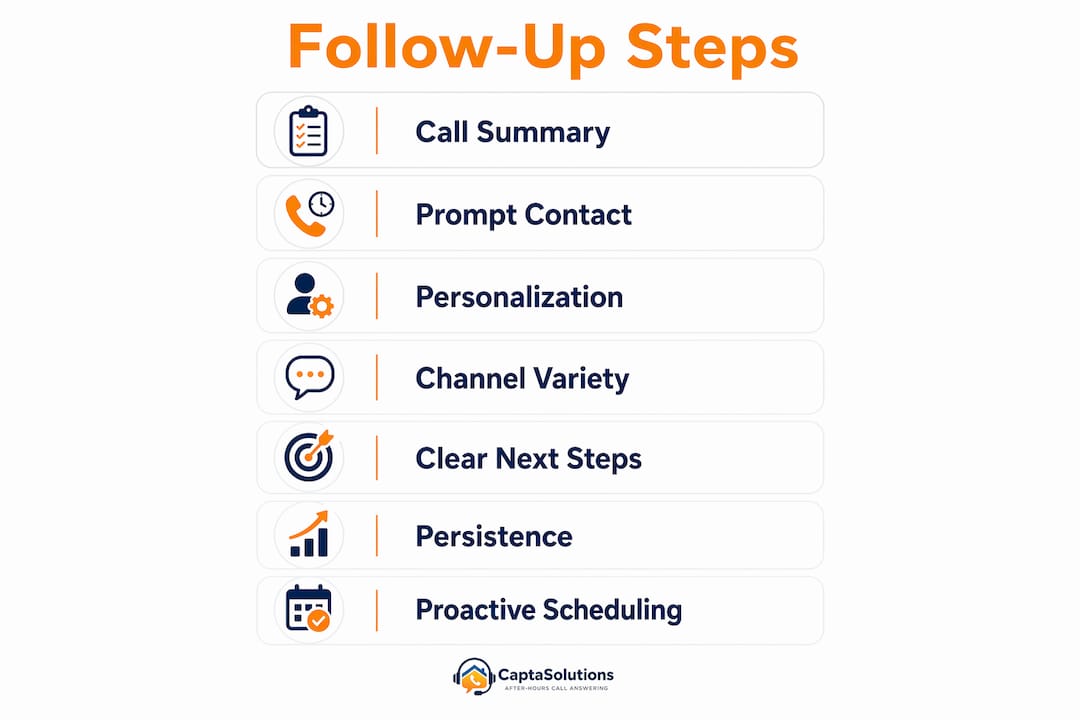
Effective post-call follow-up rests on four pillars: timeliness, personalisation, channel variety, and clear next steps. Miss any one of them and your follow-up becomes noise rather than signal.
Timeliness is the first filter prospects use to judge your professionalism. Prompt follow-up within 24 hours maintains momentum and signals that you take the conversation seriously. A follow-up sent three days after a call competes with a prospect's fresh interest in a competitor who responded the same afternoon.
Personalisation is where most follow-ups fail. Generic messages such as "Just checking in" add no value and give the prospect no reason to reply. True personalisation means referencing a specific point from the call, a challenge the prospect mentioned, or a resource directly relevant to their situation. Real human-to-human communication, not automation masked as personal, is what builds genuine rapport.

Channel variety matters because prospects have different communication preferences. A phone call, a LinkedIn message, and a follow-up email each reach the same person through a different pathway. Multi-channel follow-up creates multiple distinct opportunities for re-engagement rather than simply repeating the same contact method.
Clear next steps are the difference between a follow-up that advances the sale and one that leaves both parties in limbo. Every follow-up communication should state a specific action, a deadline, or a proposed meeting time. Vague closings such as "Let me know if you have questions" place the burden on the prospect and reduce the likelihood of a response.
- Reference a specific point from the call to show you were listening
- Attach a relevant case study, article, or proof point rather than a generic message
- State the next step explicitly: a date, a decision, or a document to review
- Keep the message concise. Three short paragraphs outperform a wall of text every time
Pro Tip: Write your follow-up email immediately after the call, while the conversation is still fresh. Even a draft saved for review later is far better than relying on memory an hour afterwards.
Why does persistence matter in a follow-up cadence?
The most common reason deals stall is not that the prospect lost interest. It is that the salesperson stopped following up too early. Follow-up cadences with 5 to 12 touches vastly outperform early drop-offs in conversion rates. This single statistic reframes persistence from an annoyance into a professional obligation.
An 8-touch, 14-day sequence is the benchmark for B2B outreach. The structure below shows how channel variety and spacing work together to maintain presence without overwhelming the prospect.
| Day | Touch | Channel | Purpose |
|---|---|---|---|
| Day 1 | Touch 1 | Summary of call, confirmed next steps | |
| Day 2 | Touch 2 | Phone call | Verbal check-in, address any questions |
| Day 3 | Touch 3 | LinkedIn message | Share a relevant article or insight |
| Day 5 | Touch 4 | Case study or proof point relevant to their challenge | |
| Day 7 | Touch 5 | Phone call | Progress check, restate value proposition |
| Day 9 | Touch 6 | New angle or objection-handling resource | |
| Day 12 | Touch 7 | LinkedIn or phone | Brief personal note, invite to a webinar or event |
| Day 14 | Touch 8 | Breakup email | Final contact, invoking loss aversion |
The breakup email at touch 8 is one of the most underused tools in follow-up. Breakup emails re-engage 10 to 20% of prospects who have not responded to earlier touches. The psychology is straightforward: people respond to the prospect of losing something. A message that says "I will close your file on Friday unless I hear from you" triggers a response that seven polite check-ins did not.
Voicemail also plays a supporting role that many professionals overlook. Leaving a voicemail does not typically generate a callback, but voicemails increase connect rates on subsequent calls by 30 to 40%. The prospect recognises your number and is more likely to answer. This makes voicemail a priming tool rather than a direct conversion mechanism.
Pro Tip: Space your touches so they feel like a considered conversation, not a chase. Two contacts in the first 48 hours, then every two to three days, prevents both urgency and fatigue.
How do you systemise follow-up without burning out?
Follow-up failures often stem from poor execution, not from a lack of leads or interest. The pipeline looks healthy on paper, but deals quietly expire because no one owns the next step. Systemising follow-up removes this dependency on memory and willpower.
The most reliable approach combines three elements: scheduled calendar blocks, lead categorisation, and a CRM to track every interaction.
-
Block time daily for follow-up. Treat it as a fixed appointment, not a task you fit around other work. Thirty minutes each morning dedicated solely to follow-up contacts prevents the backlog that kills pipelines.
-
Categorise leads by priority. An A/B/C system works well. A leads are high-intent prospects who have shown clear buying signals and receive daily or every-other-day contact. B leads are interested but not yet committed and receive contact every three to four days. C leads are early-stage or low-intent and receive weekly or fortnightly touches. Customising cadence by lead segment prevents over-touching low-interest prospects, which causes disengagement, and under-touching high-intent ones, which costs you the deal.
-
Use a CRM to log every interaction. Salesforce, HubSpot, and Pipedrive all provide automated reminders, email tracking, and pipeline visibility. The goal is to make the next action on every lead visible at a glance, so nothing relies on memory.
-
Automate reminders, not messages. Automation is most valuable for triggering the reminder to follow up, not for sending the follow-up itself. A CRM reminder that prompts you to write a personal email is far more effective than a templated sequence that the prospect can identify as automated.
-
Review your pipeline weekly. A 15-minute weekly review of all open leads identifies contacts that have gone cold and prompts re-engagement before the window closes entirely.
The field service management principles used in trades and service businesses apply directly here: scheduling, ownership, and accountability at every stage of the process. Businesses that treat follow-up as a workflow rather than a habit close more deals with less effort.
Why does follow-up build long-term relationships and trust?
The importance of follow-up extends well beyond the immediate sale. Consistent, attentive communication after calls signals to clients and prospects that you are reliable, organised, and genuinely interested in their outcome. This perception compounds over time into reputation and referrals.
Follow-up emails create a written record that reinforces what was discussed, confirms commitments, and reduces the risk of misunderstandings. In longer sales cycles or complex projects, this written accountability is not a nicety. It is a professional standard that protects both parties and keeps the project moving.
The benefits of call follow-up for relationship management include:
- Clarity and accountability. A written summary of a call confirms what was agreed and who is responsible for the next action, removing ambiguity from the relationship.
- Ongoing value delivery. Sharing a relevant article, a market update, or a resource between formal touchpoints demonstrates that you are thinking about the client's interests, not just your own pipeline.
- Credibility through consistency. Prospects and clients notice when you do what you say you will do. Following up when you said you would is one of the simplest ways to build professional credibility.
- Referral potential. Clients who feel well-served and well-communicated with are significantly more likely to refer others. The follow-up experience is part of the overall service experience, and it shapes how clients describe you to their network.
For businesses with longer sales cycles, such as professional services, construction, or consultancy, maintaining engagement during the gap between conversations is where relationships are either built or lost. Regular, value-adding contact keeps you present in the prospect's mind without requiring a formal meeting or a hard sell.
Key takeaways
Consistent, multi-touch follow-up after calls is the single most reliable driver of B2B conversion, with structured cadences of 5 to 12 contacts closing the majority of deals that a single call never could.
| Point | Details |
|---|---|
| Follow up within 24 hours | Prompt contact maintains momentum and signals professionalism to the prospect. |
| Use an 8-touch, 14-day cadence | Structured multi-channel sequences increase response rates significantly over single-channel contact. |
| Categorise leads by priority | A/B/C segmentation prevents over-touching low-intent leads and under-touching high-value prospects. |
| Personalise every message | Reference specific call details rather than sending generic check-ins to build genuine rapport. |
| Systemise with a CRM | Tools like HubSpot or Salesforce automate reminders and keep every next action visible and owned. |
What I have learned from watching follow-up go wrong
Most follow-up problems are not skill problems. They are discipline problems dressed up as process problems. I have seen businesses with excellent CRM setups, well-written email templates, and clear cadence plans still lose deals because no one actually owned the calendar block. The tool was there. The habit was not.
The other pattern I keep seeing is what I call performative personalisation. Someone adds the prospect's first name and a single line referencing the call, then sends the same template they send to everyone. Prospects notice. It reads as effort-free, and effort-free signals that you do not particularly care whether they respond. The best follow-up sequences are designed so each touch adds specific value that advances the prospect towards a decision. That requires thinking, not just scheduling.
Persistence is also misunderstood. Most professionals quit after two or three touches because they fear being annoying. The data does not support that fear. What annoys prospects is irrelevant contact. Relevant, well-timed, value-adding contact is welcomed even at touch seven or eight. The breakup email works precisely because it is honest and direct, two qualities that are rare enough in sales communication to stand out.
My practical advice: treat follow-up as an ongoing professional conversation, not a series of tasks to complete before moving on. The mindset shift from "chasing" to "continuing the conversation" changes how you write, how you time your messages, and how prospects respond to you.
— Daniel
How Captasolutions supports your follow-up process
Every effective follow-up starts with a call that was actually answered. If a prospect rings and reaches voicemail, the follow-up sequence never begins. Captasolutions answers every call in your business name, 24 hours a day, captures the caller's details, qualifies the enquiry, and organises everything into your client portal. You receive a structured lead record ready for immediate follow-up, with no information lost and no prospect left waiting.
For UK businesses managing active pipelines, this means your call answering and follow-up process starts the moment the phone rings, not when you get around to checking your missed calls. Visit Captasolutions to start a free 30-day trial with no card required and no contract.
FAQ
What is the role of follow-up after calls?
Follow-up after calls sustains engagement, confirms agreed actions, and moves prospects towards a decision through timely, personalised, multi-channel communication. Research shows that 80% of B2B sales close between the 5th and 12th contact, making structured follow-up the primary driver of conversion.
How soon should you follow up after a call?
Follow up within 24 hours of the call. Prompt contact maintains momentum, demonstrates professionalism, and reduces the risk of the prospect engaging with a competitor in the interim.
How many follow-up touches does it take to close a deal?
Most B2B deals require between 5 and 12 touches before closing. An 8-touch, 14-day sequence combining phone, email, and LinkedIn is the recommended best practice for consistent results.
What should a follow-up message include?
A follow-up message should reference a specific point from the call, confirm the next steps with a clear deadline or proposed action, and add value through a relevant resource, case study, or insight rather than a generic check-in.
How do you follow up without seeming pushy?
Space your contacts so each one adds new value rather than repeating the same request. Relevant, well-timed messages are welcomed by prospects even at later touches. A breakup email at the end of a cadence, which signals you are closing the file, re-engages 10 to 20% of non-responsive prospects without pressure.