

Missed calls are not minor inconveniences. They are lost sales walking straight to your competitors. Research shows that home service businesses miss 62% of inbound calls, and the revenue consequences are far larger than most owners realise. The role of call answering in revenue is something small business owners consistently underestimate, often because the loss is invisible. The phone rang, nobody answered, and the customer moved on without leaving a trace. Understanding this connection is the first step to protecting your income.
Table of Contents
- Why timely call answering drives revenue growth
- Impact of missed calls on small business revenue
- Solutions for efficient call answering and lead capture
- Best practices for maximising revenue through call answering
- Rethinking call answering: why speed isn't the only factor
- Discover CaptaSolutions call answering services for small businesses
- Frequently asked questions
Key Takeaways
| Point | Details |
|---|---|
| Speed is vital | Answering calls within five minutes greatly increases connection and sales chances. |
| Missed calls hurt revenue | Unanswered calls lead to substantial direct revenue loss and wasted marketing spend. |
| Quality matters too | Personalised, informed responses improve lead conversion beyond fast pickup. |
| 24/7 coverage helps | Offering round-the-clock call answering captures after-hours opportunities. |
| Invest in solutions | AI and professional services can ensure you never miss a revenue-generating call. |
Why timely call answering drives revenue growth
Speed is not just a courtesy. It is a commercial advantage with measurable results.
When a potential customer rings your number, they are at peak intent. They have already decided they need what you offer. They are simply choosing who gets their money. Contacting a lead within 5 minutes is associated with roughly 100 times higher connection likelihood compared to waiting just 30 minutes. That is not a marginal improvement. That is the difference between winning the job and losing it entirely.
The impact of call answering on sales becomes obvious when you consider buyer behaviour. A person searching for a plumber, a solicitor, or a cleaning service is not browsing leisurely. They have a problem and they want it solved. Cleaning service lead response research consistently shows that the first business to respond wins the work in the majority of cases.
Here is what the data tells us about prompt call answering and its effect on revenue:
- Leads contacted within 5 minutes are dramatically more likely to convert than those contacted after an hour
- 78% of customers buy from the first business to respond to their enquiry
- After 30 minutes, the chance of qualifying a lead drops to near zero
- After-hours calls represent a significant proportion of daily enquiries, especially in trades and service businesses
"The first-responder advantage is real. If a customer has to ring twice, there is a good chance they are already on the phone to someone else by the time you call back."
The importance of live call handling goes beyond just picking up. It means engaging the caller with relevant information, capturing their details, and moving them towards a booking or consultation. That is where the revenue is. A missed or poorly handled call does not just cost you one sale. It costs you the lifetime value of that customer and every referral they might have sent.
Impact of missed calls on small business revenue
Let us put actual numbers to this.
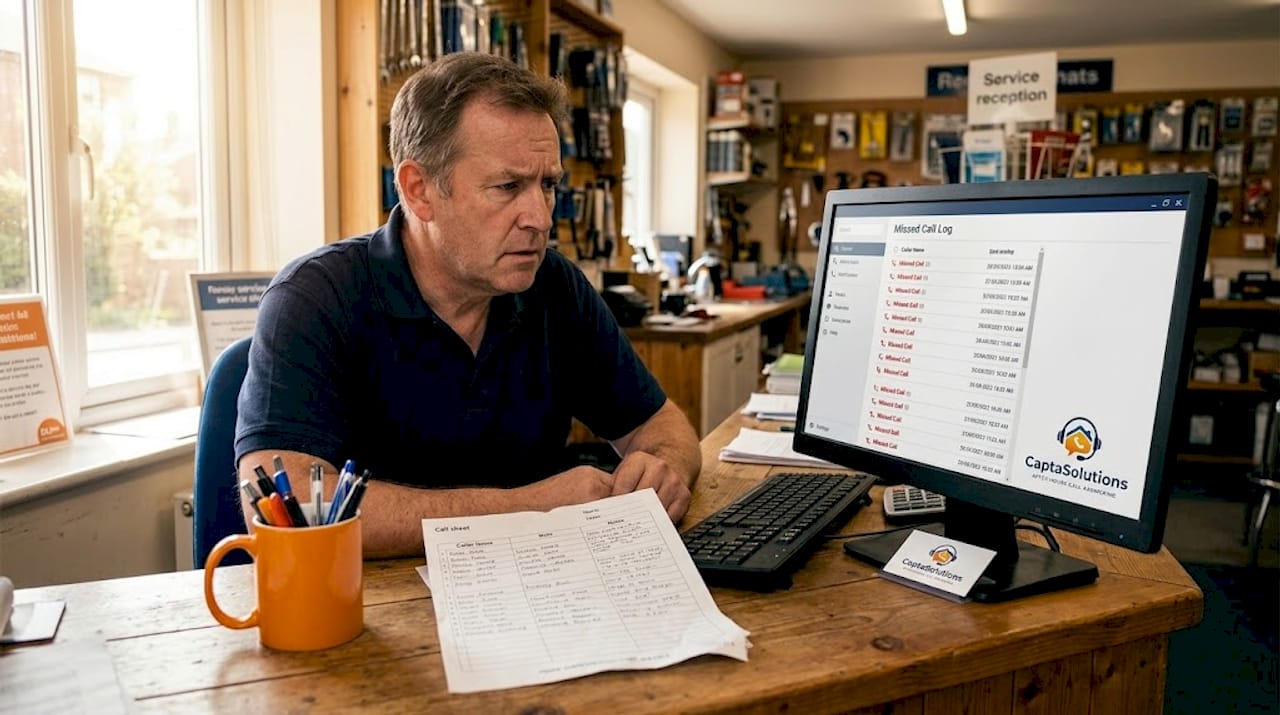
A service business with an average customer value of £5,000 and 100 monthly inbound calls could be looking at a £310,000 monthly revenue loss from missed calls alone. That figure accounts for the 62% miss rate and the customers who do not ring back. For most small businesses, even a fraction of that figure represents a serious commercial problem.
The financial consequences of unanswered calls compound in four distinct ways:
- Direct revenue loss from callers who booked with a competitor instead
- Wasted marketing spend on advertising and SEO that generated leads you never answered
- Lost lifetime value from customers who would have returned, referred others, or left positive reviews
- Reputational damage from negative experiences shared publicly online
The last point deserves more attention. A customer who rings and gets no answer often leaves a review to warn others. One ignored call can generate a public complaint that costs you five future enquiries.
| Scenario | Monthly calls | Miss rate | Lost leads | Avg. job value | Estimated monthly loss |
|---|---|---|---|---|---|
| Small trades business | 50 | 62% | 31 | £800 | £24,800 |
| Salon or clinic | 80 | 62% | 49 | £150 | £7,440 |
| Legal or professional service | 40 | 62% | 24 | £2,000 | £49,600 |
| Hospitality venue | 100 | 62% | 62 | £300 | £18,600 |
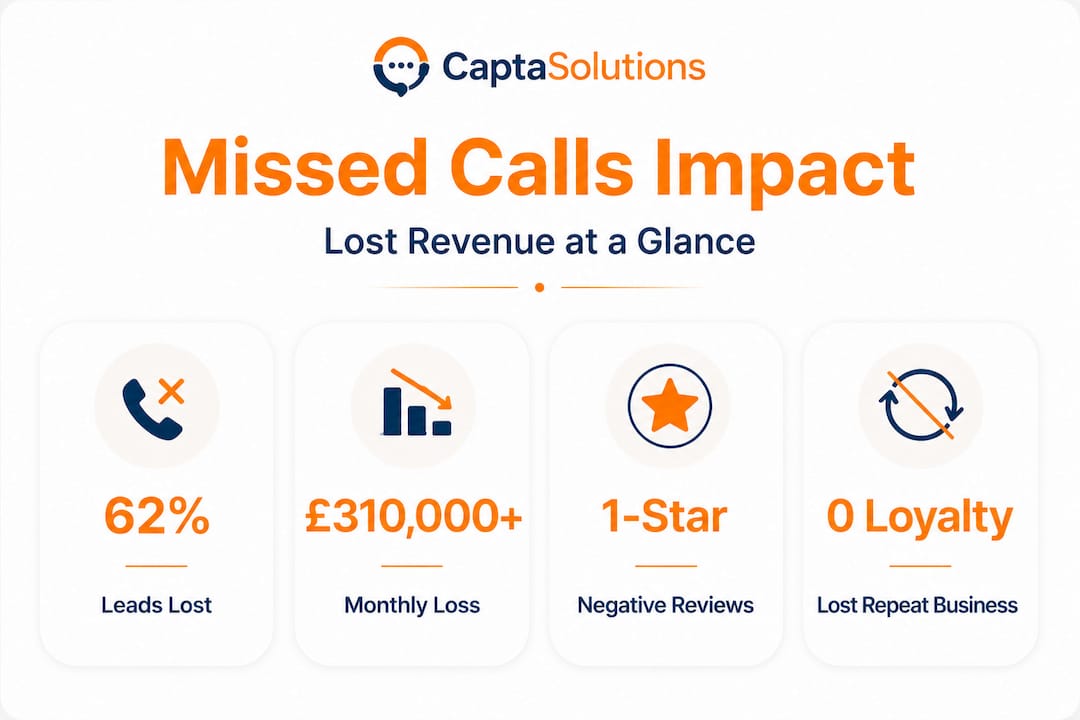
These are conservative estimates. They do not factor in repeat bookings or referrals.
Pro Tip: Calculate your own exposure by multiplying your average job value by 0.62 and then multiplying the result by your monthly call volume. The number you get is your approximate monthly revenue at risk from missed calls.
The effect of call management on profits is not theoretical. It is visible on your balance sheet if you know where to look. Every missed call is a marketing cost with zero return and a sales opportunity permanently closed.
Solutions for efficient call answering and lead capture
Understanding your options for answering calls efficiently helps you reduce lost business and protect revenue.
There are three main approaches small businesses use: human receptionists, outsourced call centres, and AI-powered call answering systems. Each carries different costs, coverage hours, and lead qualification capabilities.
| Solution | Available hours | Cost | Lead qualification | Personalisation |
|---|---|---|---|---|
| In-house receptionist | Business hours only | High (salary + NI) | Good with training | High |
| Outsourced call centre | Extended hours | Medium | Variable | Low |
| AI-powered system | 24/7 every day | Low | Consistent | Moderate to high |
AI phone systems provide 24/7 lead capture with response times under a minute, reducing missed opportunities significantly. For small businesses that cannot justify a full-time receptionist, this is particularly relevant.
Here is how each option performs in practice:
- Human receptionists are excellent during working hours. They provide warm, context-aware handling. But they go home. Cover for evenings, weekends, and holidays is either expensive or absent entirely.
- Outsourced call centres handle volume well but often lack the business-specific knowledge to qualify leads accurately. Callers can tell when someone is reading from a script.
- AI-powered systems answer immediately, gather caller details, qualify the enquiry against your criteria, and organise leads into a portal for your review. They do not take lunch or call in sick.
For many trades businesses, salons, clinics, and service providers, the practical combination is an outsourced call answering solution that uses AI to handle the volume, especially outside business hours, while ensuring no enquiry is lost.
Pro Tip: Whatever solution you choose, ensure the system captures the caller's name, contact number, and the nature of their enquiry as a minimum. This information is what makes follow-up possible when a callback is required.
Call answering service revenue growth is not a vague benefit. It is the direct result of answering more calls, qualifying more leads, and converting more of them into paying customers.
Best practices for maximising revenue through call answering
Knowing which solutions work is only part of the picture. How you implement them determines the results.
Follow these five steps to ensure your call answering approach is actively contributing to revenue growth:
-
Respond within five minutes. Responding to leads within 5 minutes increases qualification and conversion rates significantly. Set up processes or technology that make this the default, not the exception.
-
Cover every hour, not just nine to five. Many high-value enquiries arrive in the evening or at weekends, particularly in trades, hospitality, and healthcare. If your phone goes unanswered after 5pm, you are handing those jobs to competitors.
-
Use technology to qualify and route calls. Not every call is a sales opportunity. AI-powered systems can identify the nature of an enquiry, filter out time-wasters, and prioritise the leads most likely to convert. This keeps your time focused on valuable conversations.
-
Ensure your call handler has business context. Whether that is a trained receptionist, an AI system briefed on your services, or a combination of both, generic handling loses customers. Someone ringing about a loft extension wants to feel they have reached the right people immediately.
-
Review your call data regularly. Most modern call answering systems generate records of every interaction. Reviewing these weekly shows you when calls peak, which enquiry types convert best, and where your current handling is falling short.
The benefits of prompt call answering are only fully realised when these practices are in place consistently. A fast answer from someone who cannot help is only marginally better than no answer at all. Speed and preparation together are what drive results.
Enhancing customer experience through calls is not a marketing exercise. It is a revenue strategy. Customers who feel heard and well-handled on the phone become loyal, repeat clients. They leave reviews. They refer friends. The commercial value of that goes well beyond the first transaction.
Rethinking call answering: why speed isn't the only factor
Here is something most guides on this topic miss entirely.
Speed matters, and the five-minute rule is well established. But a fast answer that fails to connect with the caller's actual need does not convert. How call answering boosts revenue is not purely a function of response time. It is a function of response quality combined with speed.
Response quality matters nearly as much as speed in converting leads. A caller who reaches someone immediately but receives a confused, scripted, or unhelpful response will disengage. They may not ring back. They may leave without booking. And you will never know why.
This is where many small businesses make an expensive mistake. They invest in a solution that answers calls quickly but handles them generically. A customer rings a roofing company and is met with a call centre agent who knows nothing about the trade, cannot answer basic questions about response times or pricing, and takes a message without any qualification. The caller, already mid-search on their phone, rings the next number on the list.
The fix is not complicated. Any call answering solution you implement needs to operate with your business context built in. That means knowing your services, your service area, your typical availability, and the questions callers commonly ask. When callers feel they have reached someone knowledgeable, they stop shopping around.
There is also a retention dimension here that rarely gets discussed. Customers who have excellent call experiences, even on their first inbound enquiry, are measurably more likely to become repeat clients and to refer others. The revenue from call answering is not just in the first conversion. It accumulates over the lifetime of the customer relationship. Prioritising call quality, not just call speed, is what separates businesses that grow from those that merely keep up.
Discover CaptaSolutions call answering services for small businesses
If the data in this article has made you think differently about what your phone costs you every day, you are already ahead of most small business owners in the UK.
CaptaSolutions is an AI-powered call answering service built specifically for UK businesses that cannot afford to miss a call. Whether you are a tradesperson on a job, a salon with clients in the chair, or a professional office after hours, CaptaSolutions answers every call in your business name, 24 hours a day, 7 days a week. It captures caller details, qualifies the enquiry, and organises everything into your client portal so you always stay in control. There is a free 30-day trial with no card required, no contract, and you can be live within the hour. Call 07346 811329 or visit captasolutions.co.uk to get started today.
Frequently asked questions
Why does answering calls quickly increase my revenue?
Answering calls quickly connects you with customers during their high-intent window, making them far more likely to book or buy. Contacting a lead within 5 minutes vastly increases connection and qualification chances compared to any delayed response.
How much revenue can my business lose from missed calls?
The losses are substantial and largely invisible. Missed calls can lead to £310,000 in monthly revenue loss for a typical service business, excluding the compounding impact of lost referrals and repeat custom.
What are the best call answering options for small businesses?
AI-powered phone systems offer the strongest combination of cost, coverage, and speed for most small businesses. AI phone systems provide 24/7 lead capture with rapid response times and consistent lead qualification, outperforming traditional options on availability.
Does call answering quality matter as much as speed?
Yes, speed without quality still loses customers. Personalised, context-aware responses significantly improve conversion and trust, and response quality matters nearly as much as speed when it comes to turning an enquiry into a paying customer.