

Every answered call is a signal. It tells a customer that your business is active, organised, and ready to help. Understanding how call answering builds customer trust is not a soft skill exercise. It is a direct driver of revenue, reputation, and repeat business. Inbound phone calls remain a critical touchpoint for customers dealing with urgent or complex issues, and how you handle those calls shapes whether they stay or leave. The businesses that answer well do not just solve problems. They build relationships.
How does prompt call answering build customer trust?
Prompt call answering signals respect. When a customer calls and someone picks up quickly, they immediately feel that their time matters to your business. That feeling is the foundation of trust, and it forms within the first few seconds of an interaction.

Unanswered calls create expectation mismatch and reduce trust immediately. A customer who reaches voicemail, or no answer at all, does not wait patiently. They move to the next business on their list. The cost of a missed call is not just one lost enquiry. It is a lost relationship before it ever started.
The contrast between live answering and voicemail is stark. A live answer gives the caller a person or a capable service to speak with right now. Voicemail asks them to wait, hope, and follow up. Most do not bother.
| Answering method | Customer experience | Trust impact |
|---|---|---|
| Live answer within 3 rings | Immediate, personal, and responsive | High. Customer feels valued and heard |
| Voicemail with callback promise | Delayed, uncertain, and impersonal | Medium. Trust depends on callback speed |
| No answer or engaged tone | Frustrating and dismissive | Low. Customer likely calls a competitor |
| AI-powered answering (e.g. Captasolutions) | Immediate, consistent, and available 24/7 | High. Combines speed with reliability |
Phone interactions are high-visibility moments that shape brand perception more than most businesses realise. A single poor call experience can undo weeks of good marketing.
Pro Tip: Set a target of answering all calls within three rings. If your team cannot consistently meet that standard during busy periods, an AI-powered answering service can hold that line for you without exception.
What qualities in a call make customers trust your business?
Trust does not come from answering alone. It comes from how the call is handled once connected. The quality of the interaction determines whether a customer feels confident in your business or quietly starts looking elsewhere.
Active listening is the most underused skill in call handling. When a caller explains their situation, they need to feel heard before they feel helped. Interrupting, rushing, or jumping to solutions before the customer has finished speaking signals impatience, not professionalism.
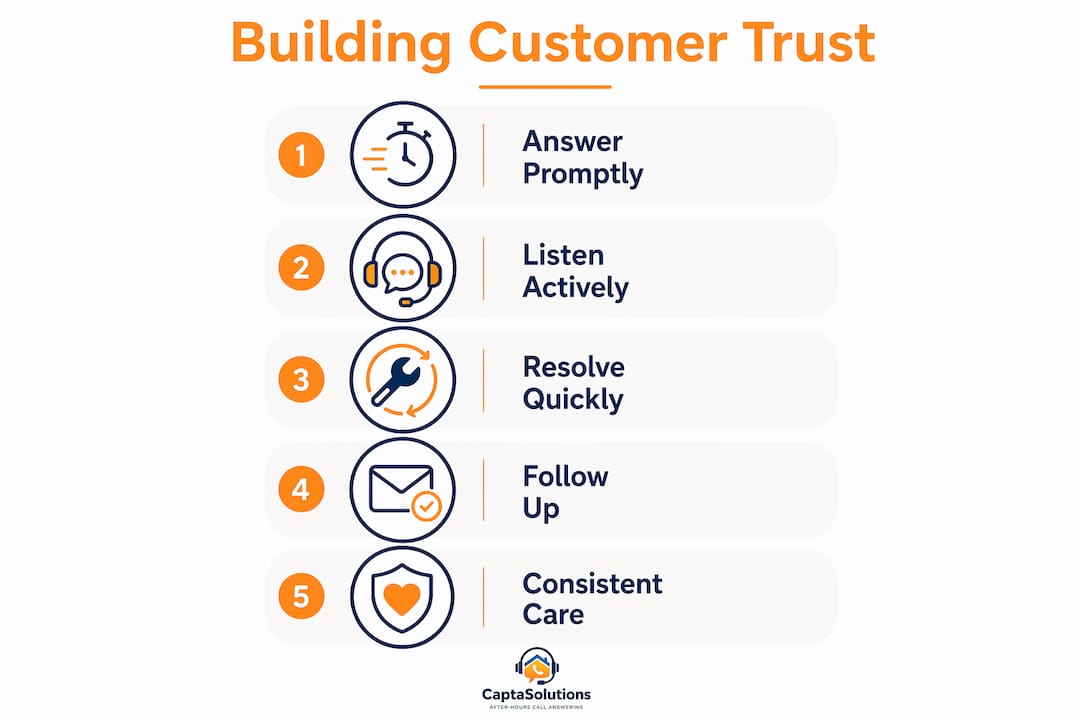
Consistent tone and prompt responses build brand stability across every call. A business that sounds different depending on who picks up creates uncertainty. Customers trust businesses that feel the same every time they call.
The following practices define effective call handling:
- Answer with your business name and a greeting. Never just "hello."
- Use the caller's name once you have it. It personalises the exchange immediately.
- Confirm what the caller needs before offering a solution. Repeat it back to them.
- Avoid jargon. Speak in plain language that matches the caller's level.
- If you cannot resolve the issue immediately, give a clear timeframe for follow-up.
- End every call with a summary of what was agreed and what happens next.
Satisfied callers become brand advocates through positive word of mouth. A call handled well does not just retain one customer. It generates referrals.
Pro Tip: Record and review a sample of your calls each month. You will quickly identify patterns in tone, accuracy, and resolution speed that training alone cannot reveal.
How does call answering fit into your wider customer experience?
Call answering does not operate in isolation. It sits within a broader customer experience that includes email, live chat, social media, and self-service tools. The question is not whether to offer phone support. It is how to position it where it adds the most value.
Voice calls provide immediacy and clarity that digital channels often cannot match. A complex booking issue, a complaint, or an urgent service request is almost always better resolved by voice than by a back-and-forth email thread. Customers know this, which is why they reach for the phone when the stakes feel high.
The following scenarios show where phone calls consistently outperform digital channels:
- Urgent service requests. A customer with a burst pipe or a broken boiler does not want to submit a ticket. They need a human voice confirming that help is on the way.
- Complex enquiries. Multi-part questions with variables are faster to resolve by voice. Typing out a nuanced situation takes time. Speaking it takes seconds.
- Complaints and disputes. Customers in conflict want to feel heard. A calm, professional voice de-escalates tension faster than written responses.
- High-value decisions. Customers spending significant money want reassurance. A confident, knowledgeable voice closes more sales than a product page.
Combining call answering with digital self-service creates a support structure that handles volume without sacrificing quality. Routine enquiries go to self-service. Complex or urgent ones come to the phone. That division protects your team's time and your customers' patience.
Practical steps to improve call answering and build trust
Improving call answering is a process, not a single fix. The businesses that do it well build systems, train consistently, and measure what matters.
Train for empathy, not just accuracy
Staff training on call handling often focuses on scripts and product knowledge. That is necessary but not sufficient. Empathy training teaches staff to recognise emotional cues in a caller's voice and respond accordingly. A customer who sounds frustrated needs acknowledgement before they need a solution. Training staff to pause, listen, and validate before problem-solving reduces call escalations and improves resolution rates.
Build a clear routing and escalation structure
Logging call details and ensuring follow-ups contribute directly to structured customer management. Every call should have a defined path. Who answers first? Who handles escalations? What happens when the right person is unavailable? A business without clear routing leaves customers repeating themselves to multiple staff members. That erodes trust faster than a missed call.
Use technology to extend your availability
Extended phone support hours demonstrate commitment and reinforce reliability. Most small businesses cannot staff phones around the clock. AI-powered call answering solves this without the overhead. Captasolutions, for example, answers every call in your business name, 24 hours a day, captures caller details, and organises enquiries into a client portal. You review leads when it suits you. No call goes unanswered, and no opportunity is lost after hours. You can read more about AI call answering uses across different UK business types.
Measure what you manage
| Metric | What it measures | Why it matters |
|---|---|---|
| First-call resolution rate | Percentage of issues resolved in one call | High rates indicate clear, accurate communication |
| Average answer time | Seconds before a call is picked up | Directly correlates with customer satisfaction |
| Call abandonment rate | Callers who hang up before being answered | Reveals capacity gaps and missed opportunities |
| Follow-up completion rate | Promised callbacks that actually happen | Reflects reliability and follow-through |
Tracking these metrics monthly gives you a clear picture of where trust is being built and where it is being lost. The role of call answering in revenue becomes visible when you connect resolution rates to conversion and retention data.
Key takeaways
Effective call answering builds customer trust by combining speed, consistency, and clear communication at every interaction.
| Point | Details |
|---|---|
| Prompt answering signals reliability | Picking up quickly tells customers their time is valued and your business is active. |
| Call quality determines trust depth | Empathy, accuracy, and a clear resolution process build lasting confidence. |
| Voice outperforms digital for complex issues | Phone calls resolve urgent and nuanced situations faster than any written channel. |
| Availability beyond hours builds loyalty | Answering calls outside standard hours demonstrates commitment and distinguishes your business. |
| Measurement drives improvement | Tracking resolution rates and answer times reveals where trust is won or lost. |
Why I think most businesses underestimate the phone
The businesses I see struggle most with customer trust are not the ones with bad products. They are the ones with inconsistent communication. A customer can forgive a delayed delivery. They rarely forgive being ignored.
The most common mistake I observe is treating call answering as a fallback, something that happens when email does not work. That framing gets it backwards. For a large portion of customers, especially those dealing with something urgent or spending real money, the phone call is the primary test of your business. Pass it and they trust you. Fail it and they leave without telling you why.
The automation question comes up constantly. Business owners worry that AI answering feels impersonal. My view is that a well-configured AI answer is far more trustworthy than a phone that rings out. Customers do not expect a human at every touchpoint. They expect a response. Speed and consistency matter more than the source of the answer, provided the information captured is accurate and the follow-up is prompt.
Customer expectations around phone support are rising, not falling. The businesses investing in call answering for word of mouth are seeing the downstream effect in referrals and reviews. The ones ignoring it are losing ground quietly, one unanswered call at a time.
— Daniel
Captasolutions: professional call answering for UK businesses
Every missed call is a missed opportunity to build trust with a potential client. Captasolutions answers every call in your business name, 24 hours a day, 7 days a week, so no enquiry goes unanswered regardless of how busy you are.
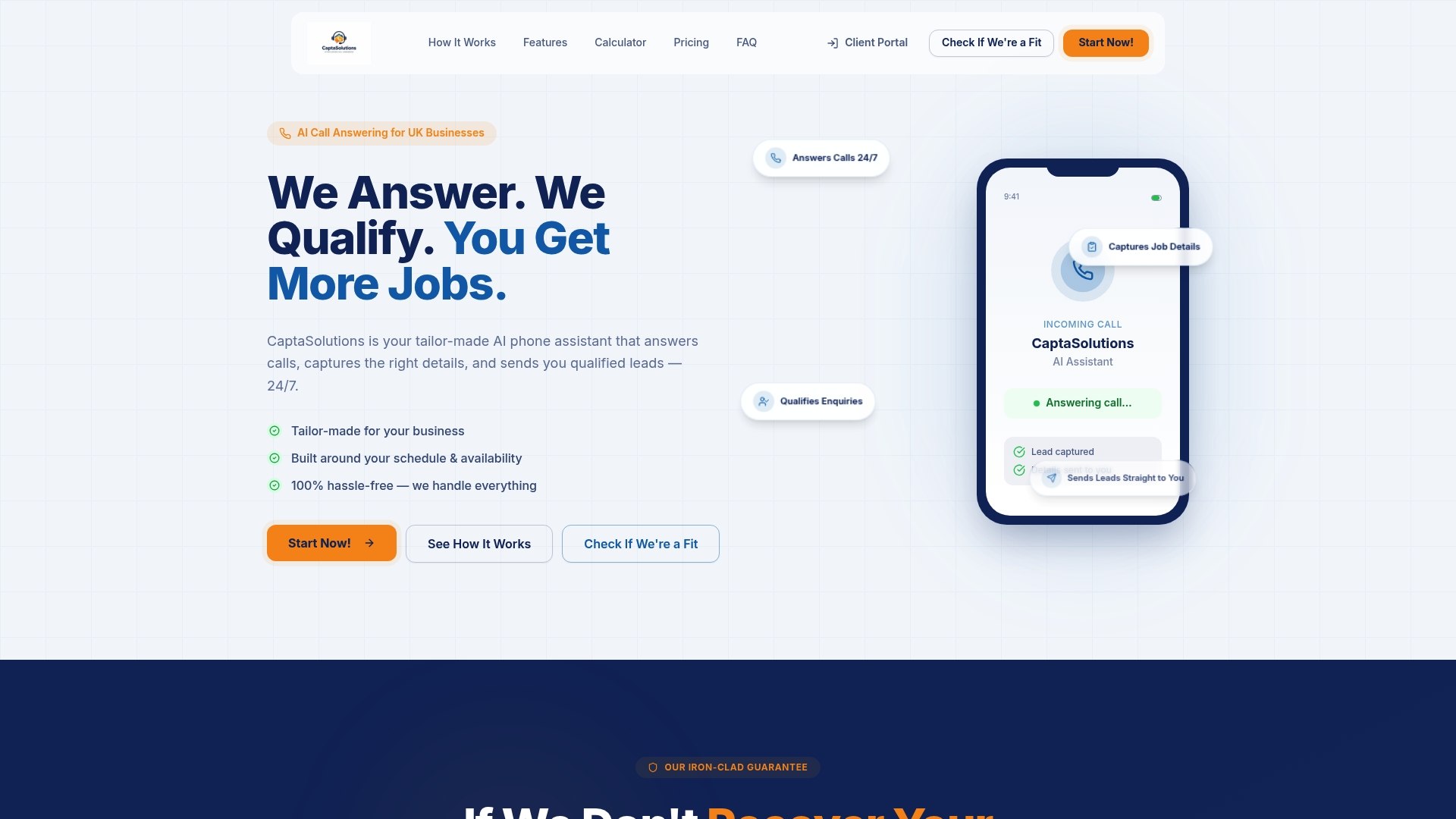
The service captures caller details, qualifies each enquiry, and organises everything into your client portal. You stay in control of every lead without being tied to your phone. Trades businesses, restaurants, salons, clinics, and professional offices across the UK use Captasolutions to maintain a consistent, professional presence on every call. Visit captasolutions.co.uk to start your free 30-day trial. No card required, no contract, and live within the hour.
FAQ
Why does answering calls quickly build customer trust?
Speed signals that your business is active and values the caller's time. Unanswered or delayed calls create doubt and push customers towards competitors.
What is the difference between live answering and AI call answering for trust?
Both build trust when handled well. Live answering offers a human connection, while AI-powered answering provides consistent availability and speed. The key factor is whether the caller receives a prompt, accurate, and helpful response.
How does call answering affect customer loyalty?
Consistent call handling and courteous responses reduce tension and encourage positive word of mouth. Customers who feel heard and helped are more likely to return and recommend your business.
Can small businesses afford professional call answering?
AI-powered services like Captasolutions make professional call answering accessible without the cost of a full-time receptionist. A free trial with no contract removes the financial risk of getting started.
What metrics should I track to measure call answering quality?
Track first-call resolution rate, average answer time, call abandonment rate, and follow-up completion rate. These four metrics give a clear view of where your call handling builds or loses customer confidence.