
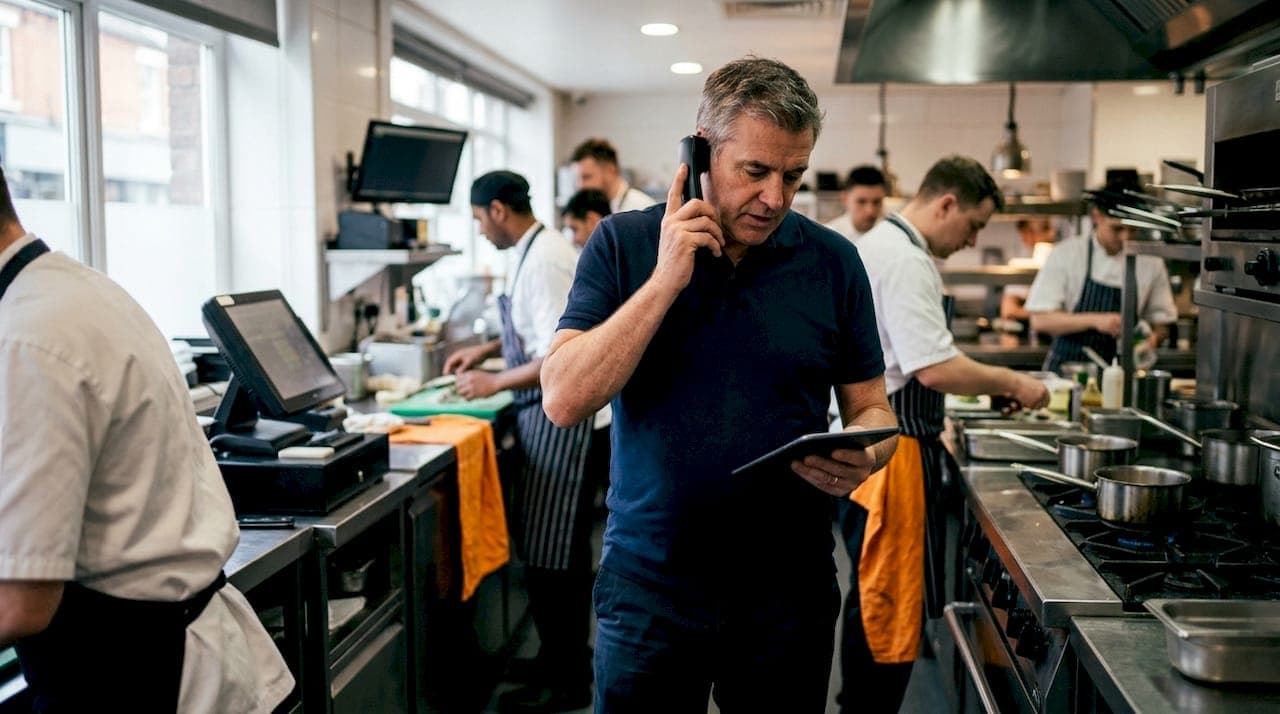
Effective call answering is the single most direct lever a UK restaurant has for capturing bookings, protecting revenue, and delivering the kind of customer service that builds loyalty. Every unanswered call during a Friday evening rush is a booking that goes to a competitor. Modern call answering solutions, including AI-powered systems from providers like Captasolutions, Popmenu, and Ultatel, have made it possible for restaurants of any size to answer every call, every time, without adding headcount. This article sets out the eight most important call answering benefits for restaurants, with practical guidance on what to look for and how to act.
1. The core call answering benefits restaurants cannot afford to ignore
Professional call answering, also referred to as telephone answering or phone handling, covers any system or process that captures incoming calls reliably and converts them into confirmed bookings, orders, or resolved enquiries. For UK restaurants, the stakes are high. Missed calls cost restaurants up to 10% of potential orders, which means a busy venue turning over £30,000 a week could be losing £3,000 before a single table is seated. That figure does not account for the long-term damage to customer loyalty when a caller simply moves on.
The benefits of call answering extend well beyond plugging a revenue leak. Consistent, professional phone handling signals to guests that your operation is organised and attentive. It reduces pressure on front-of-house staff during service, and it generates data that helps you understand what your guests actually want.
Pro Tip: Track how many calls arrive during your two busiest service hours each day for one week. The number will almost certainly surprise you, and it gives you a concrete baseline for measuring improvement.
2. Never miss a booking outside opening hours
A significant share of restaurant bookings happen outside the venue's operating hours. Guests search for a table on a Tuesday evening for the coming weekend, or they call at 10pm after seeing a recommendation on social media. Without a call answering solution in place, those calls go to voicemail or ring out entirely.
24/7 availability and faster call resolution are among the most cited advantages of AI phone systems for restaurants. A caller who reaches a live or AI-powered response at 10:30pm books the table. A caller who hears a voicemail message typically does not. For restaurants that rely on weekend trade, capturing even two or three additional bookings per night outside hours can represent a meaningful uplift in weekly covers.
Direct phone bookings also carry a financial advantage worth noting. OpenTable introduced a 2% service fee on reservations in late 2025 and early 2026. Restaurants that capture bookings directly via phone avoid that fee entirely, which adds up quickly across hundreds of covers per month.
3. How AI-powered call answering transforms restaurant operations
AI-powered call answering uses natural language processing to hold a genuine conversation with a caller, take a booking, answer common questions, and pass complex queries to a human when needed. The system answers on the first ring, with no hold time, regardless of how many calls arrive simultaneously during a Saturday lunch service.
The operational gains are measurable. Restaurants using AI phone answering have reported saving 260 hours in a single quarter and seeing a 132% increase in online sales after implementation. Those hours represent front-of-house staff who are present on the floor rather than tied to a handset. The revenue increase reflects both better booking capture and the upselling capability built into AI systems.
AI systems also handle the calls that consume disproportionate staff time: directions, opening hours, allergen queries, parking information, and special occasion requests. Removing these from the staff workload during service is not a marginal gain. It is the difference between a team that is focused on the guest in front of them and one that is constantly interrupted.
Pro Tip: When evaluating AI call answering providers, ask specifically whether the system can handle simultaneous calls. A system that queues callers defeats the purpose during peak hours.
4. Upselling on every call without pressuring guests
Upselling is one of the most consistent revenue drivers in hospitality, and the phone call is an underused channel for it. AI systems recommend starters, drinks, and desserts based on the context of the order or booking, doing so in a natural, conversational way that does not feel like a sales pitch. A caller booking a table for a birthday is a natural candidate for a mention of the set celebration menu or a bottle of champagne on arrival.
Human staff, under pressure during service, rarely upsell consistently on the phone. An AI system does it on every single call, without variation. Restaurants using AI upselling report higher average check sizes and, notably, higher customer satisfaction scores. Guests respond well to relevant suggestions delivered without pressure.
The financial case is straightforward. If your average cover is £35 and an upsell adds £6 per booking, capturing that uplift on 50 phone bookings per week generates an additional £300 per week, or roughly £15,600 per year, from a single channel.
5. Reducing no-shows through better call handling
No-shows are one of the most damaging operational problems a restaurant faces. A table of four that does not arrive on a busy Friday evening represents lost food cost, lost labour, and a gap that could have been filled. Prompt, professional call answering reduces no-shows in two ways.
First, a confirmed booking taken by a real or AI-powered voice carries more weight than an online form submission. The caller has had a conversation, received a confirmation, and in many cases been reminded of the booking details. Second, call answering systems can be configured to make outbound confirmation calls or send follow-up messages, reducing the likelihood of a forgotten booking. Prompt call answering reduces no-shows and protects both sales and brand reputation, according to data from Ultatel's restaurant deployments.
"The phone call is still the most personal booking channel a restaurant has. A guest who has spoken to someone, or something that sounds like someone, feels a greater sense of commitment to that booking."
6. Meeting UK customer expectations for phone contact
Phone is not a declining channel for UK consumers. 68% of UK customers choose phone for urgent enquiries and 55% prefer it for complex ones. This data from the CCMA positions phone answering not as a legacy function but as the primary channel for high-value customer interactions. A guest with a serious allergy query, a large group booking, or a complaint will reach for the phone, not a web form.
Restaurants that handle these calls well build trust. Restaurants that let them ring out, or answer them poorly, lose the guest permanently. The importance of phone answering in hospitality is directly tied to the fact that phone callers are disproportionately high-value guests: they are booking for occasions, making complex requests, or resolving problems that matter to them.
Email handles routine queries well. Phone handles the moments that matter. A restaurant's call answering capability is, in effect, its customer service capability for everything that counts.
7. Integration with POS, CRM, and reservation systems
A call answering system that operates in isolation from the rest of your technology stack creates more work, not less. The real operational gain comes from POS and reservation integration that allows the call answering system to check real-time table availability, update the reservation book automatically, and pass caller data into your CRM without manual re-entry.
Systems that integrate with platforms such as OpenTable, ResDiary, or a venue's own POS eliminate the double-handling that leads to errors. A booking taken by phone and entered manually into a separate system is a booking that can be duplicated, mis-timed, or lost. Integration removes that risk entirely and gives managers a single, accurate view of covers across all booking channels.
For restaurants building a guest database, call answering integration with CRM tools means every phone caller becomes a contact record. Repeat callers are recognised, preferences are logged, and marketing communications become more targeted. This is how answering calls grows business beyond the immediate transaction.
8. Using call analytics to improve service continuously
Call data is one of the most underused sources of operational intelligence in UK restaurants. Every call contains information: what guests are asking about, when they are calling, what they are ordering, and where the conversation breaks down. Automated analytics from call answering systems provide dashboards and reports that surface these patterns without any manual effort.
A restaurant that sees a spike in allergen queries every weekend can update its menu descriptions or train staff accordingly. One that notices a high volume of calls about parking can add that information to its outgoing message. Operators who review call data regularly make smarter staffing decisions, run more relevant promotions, and identify service gaps before they become complaints.
This is the difference between a reactive operation and a proactive one. The data is already there in every call. A good call answering system makes it visible and usable.
Key takeaways
Effective call answering directly protects restaurant revenue, reduces no-shows, and builds the guest trust that drives repeat bookings.
| Point | Details |
|---|---|
| Missed calls cost real money | Unanswered calls can cost up to 10% of potential orders, making consistent answering a revenue priority. |
| AI handles calls 24/7 | AI-powered systems answer on the first ring at any hour, capturing bookings that would otherwise be lost overnight. |
| Phone drives high-value interactions | 68% of UK customers use phone for urgent queries, making call handling central to customer service quality. |
| Integration removes manual errors | Connecting call answering to POS and reservation systems like OpenTable or ResDiary eliminates double-entry and booking mistakes. |
| Analytics turn calls into insight | Call data dashboards reveal guest preferences and service gaps, enabling smarter staffing and promotions. |
Why call answering deserves more strategic attention than most managers give it
Most restaurant managers I speak with treat the phone as background infrastructure. It rings, someone answers it, job done. That framing misses the point entirely. The phone is the highest-intent channel you have. A person who picks up the phone to call a restaurant has already decided they want to eat there. Your only job at that moment is not to lose them.
What I find consistently is that restaurants invest heavily in their online presence, their social media, their menu design, and their interior, and then let calls ring out during service because the team is busy. That is a fundamental mismatch of priorities. The AI receptionist model addresses this directly, but the mindset shift has to come first.
The other thing worth saying plainly: AI call answering is not a replacement for hospitality. It is a replacement for a ringing phone that nobody answers. The warmth, the judgement, the genuine connection with a guest, that still comes from your team. What AI removes is the gap between a caller and a response. That gap is where revenue disappears and where trust erodes.
My advice to any restaurant manager reading this is to spend one week treating every unanswered call as a lost booking. Count them. Price them. Then decide whether your current setup is adequate.
— Daniel
How Captasolutions helps UK restaurants answer every call
Captasolutions is an AI-powered call answering service built specifically for UK businesses that cannot afford to miss a call. For restaurants, that means every incoming call is answered in your business name, 24 hours a day, seven days a week, whether your team is in the middle of a busy service or the kitchen is closed for the night.
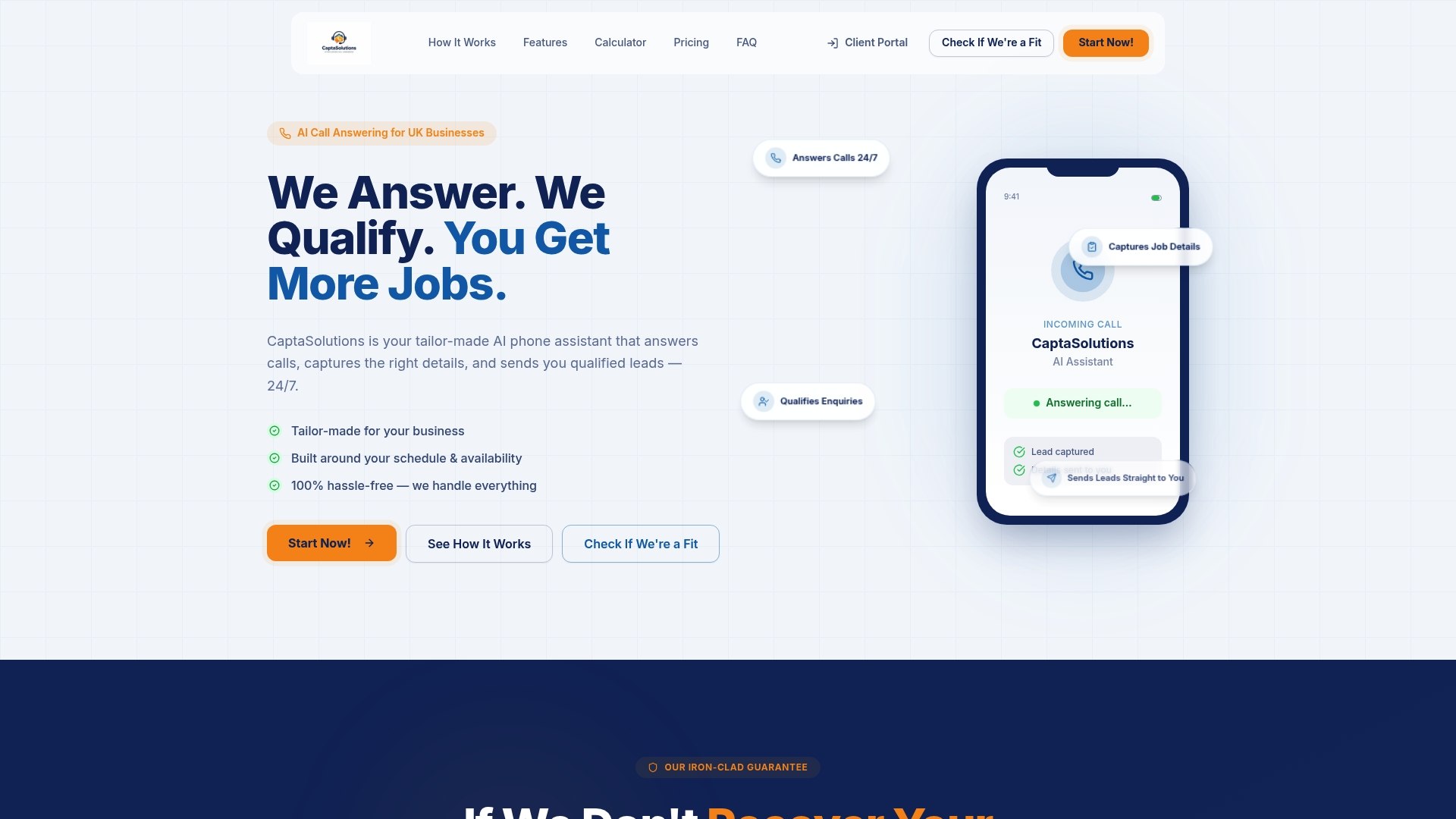
The system captures caller details, handles booking enquiries, answers common questions, and organises everything into a client portal so you stay in control without being tied to the phone. There is no contract, no card required, and the service goes live within the hour. Captasolutions offers a free 30-day trial so you can see the impact on your bookings before committing to anything. Visit captasolutions.co.uk or call 07346 811329 to get started today.
FAQ
What are the main call answering benefits for restaurants?
The primary benefits are capturing more bookings, reducing missed orders, lowering no-show rates, and freeing front-of-house staff to focus on guests. AI-powered systems add upselling capability and 24/7 availability on top of these core gains.
How much revenue can a restaurant lose from missed calls?
Missed calls can cost a restaurant up to 10% of potential orders. For a venue with significant phone booking volume, that represents a substantial weekly revenue loss before any other factors are considered.
Why do UK restaurant customers still prefer the phone?
68% of UK customers choose phone for urgent enquiries and 55% for complex ones, according to CCMA research. Restaurant guests calling about allergies, large group bookings, or special occasions consistently prefer to speak rather than submit a form.
Can AI call answering integrate with reservation systems like OpenTable?
Yes. AI call answering systems can integrate with platforms including OpenTable, ResDiary, and most POS systems, updating availability in real time and eliminating the manual re-entry that causes booking errors.
Is AI call answering suitable for small independent restaurants?
AI call answering is particularly well suited to independent restaurants, which typically lack the staffing to dedicate someone to the phone during service. Services like Captasolutions require no contract and offer a free trial, making the entry point low and the risk minimal.