

Call answering is the single phone interaction that determines whether a customer recommends your business or warns others away from it. The role of call answering in word of mouth is direct: every call shapes an emotional response, and that response becomes the story a customer tells. Customer service drives word of mouth as a primary marketing channel, where peer recommendations reflect the unscripted experience of a phone call and crystallise brand reputation. Businesses that answer calls well generate referrals. Businesses that do not generate warnings.
How does call answering quality shape customer perception?
The tone, speed, and competence of a phone interaction directly shape how a customer feels about your business. That emotional response does not stay private. Customer service interactions become public assets or liabilities that influence brand reputation far beyond the original caller. Electronic word of mouth amplifies those stories online, affecting wider consumer decisions across review platforms, social media, and community groups.
Professional, empathetic communication triggers positive word of mouth because it makes callers feel valued. A customer who feels heard during a phone call is far more likely to mention your business to a friend or colleague. The opposite is equally true. Poor phone etiquette, long hold times, or an abrupt response creates a negative emotional anchor that the caller retells repeatedly.
The importance of phone etiquette cannot be reduced to politeness alone. Callers assess competence, confidence, and genuine interest within the first few seconds. Key etiquette principles that matter most to customers include:
- Answering within three rings to signal attentiveness
- Using the business name clearly at the start of the call
- Speaking at a measured pace without filler words
- Listening without interrupting before offering a solution
- Confirming the caller's details and next steps before ending the call
Each of these signals respect. Together, they create a call experience worth talking about.
Pro Tip: Train call handlers to pause for two seconds before responding to a query. That brief pause signals that the handler is thinking carefully, not rushing to close the call. Callers notice the difference and remember it.
What is the 90-second window in call handling?
Call answering and call handling are not the same thing. Answering is picking up the phone. Call handling is resolving the caller's need within approximately 90 seconds of answering. That distinction matters because word of mouth is built on complete experiences, not partial ones.
The 90-second rule applies to three outcomes: booking an appointment, delivering the information the caller needs, or capturing the lead for a qualified follow-up. Failing to achieve one of these within the first 90 seconds increases the likelihood of a lost lead and a negative impression. That impression is what the caller carries away and shares.
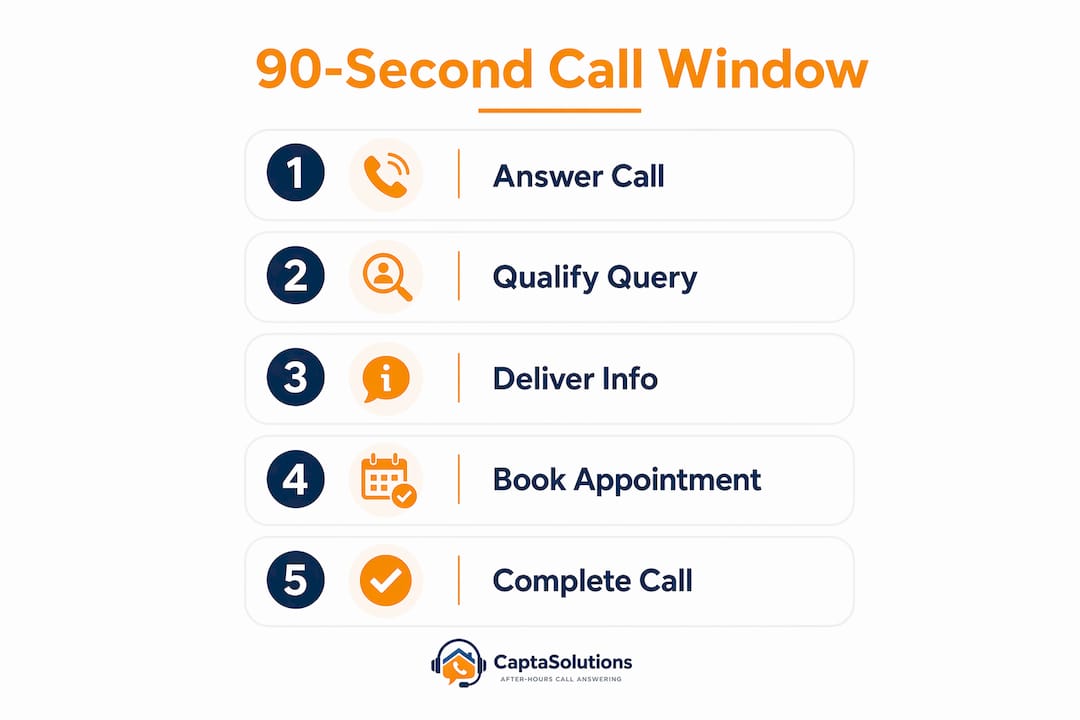
Immediate call resolution increases conversion chances by up to 400% compared with delayed callbacks. The 10-minute window after a call is when conversion odds are highest. Letting that window close through poor call handling does not just lose a sale. It removes a potential referral from your pipeline entirely.
AI-powered call answering addresses this directly. AI agents can handle 100% of calls, including overflow and after-hours enquiries, completing transactions during the initial call without placing callers on hold or requiring callbacks. That consistency in call completion is what builds the kind of reputation customers recommend to others.
The four stages of effective call handling that support word of mouth are:
- Answer within three rings, every time, regardless of how busy the business is
- Identify the caller's need clearly within the first 30 seconds
- Resolve, book, or capture the lead within 90 seconds of answering
- Confirm the outcome and thank the caller before ending the call
Each stage is a checkpoint. Missing any one of them reduces the chance of a positive referral.
How do missed calls reduce word-of-mouth referrals?
Missed calls are not neutral events. The emotional state of the caller at the moment of phone interaction strongly shapes whether they become promoters or detractors of a brand. A missed call creates a negative emotional proof point. That proof point discourages future referrals and, in many cases, actively generates negative word of mouth.
78% of callers who reach voicemail do not call back, often moving to a competitor instead. That figure represents not just a lost sale but a lost referral source. The caller who moved on will tell others about their experience, and that story will not favour your business.
The psychological effect of a missed call is one of perceived neglect. Customers interpret an unanswered phone as a signal that the business is either too busy to care or poorly organised. Neither interpretation supports a positive recommendation. The damage compounds over time because each missed call reinforces the same negative narrative in the caller's mind.
Businesses that rely on voicemail as a fallback misunderstand how callers behave. Most callers expect a live response. When they do not get one, they do not wait. They move on and they talk.
Pro Tip: Use an AI-powered answering service to cover calls during peak hours, lunch breaks, and after hours. Captasolutions answers every call in your business name, 24 hours a day, capturing the caller's details and qualifying the enquiry so no lead is lost and no negative impression is created.
What are the best practices for improving call answering?
Improving call answering for better word of mouth requires both process and technology. The most effective approach combines trained staff, clear call protocols, and AI-powered support for overflow and after-hours calls.

Businesses with 24/7 answering services capture around 34% of monthly leads outside business hours that would otherwise be lost. That figure represents a significant volume of potential referral sources that most businesses are currently ignoring. Capturing those calls converts callers into customers, and customers into advocates.
Staff training should focus on three areas: active listening, lead qualification, and call completion. Active listening reduces the need for repeat calls. Lead qualification ensures the right calls are prioritised. Call completion, meaning a resolved query or a confirmed booking before the call ends, is the single most powerful driver of positive word of mouth from phone interactions.
Integration with a CRM system closes the loop. When call outcomes are logged automatically, businesses can track which calls converted, which callers returned, and which referral sources came from phone-based interactions. That data informs both staffing decisions and marketing investment.
| Approach | Coverage | Call completion rate | Word-of-mouth impact |
|---|---|---|---|
| In-house staff only | Business hours | Variable | Inconsistent |
| Outsourced call centre | Extended hours | Moderate | Generic experience |
| AI-powered answering (e.g. Captasolutions) | 24/7 | High | Consistent, branded |
Pro Tip: Review call logs weekly. Look for patterns in unanswered calls, repeat enquiries, and dropped leads. Those patterns reveal exactly where your call process is losing referral potential.
For businesses in specific sectors, the impact is even more pronounced. Call answering benefits for UK restaurants include direct improvements in booking rates and customer recommendations. The same principle applies across trades, clinics, and salons.
How do you measure the impact of call answering on word of mouth?
Measuring the impact of call answering on word of mouth requires tracking the right indicators at the right points in the customer journey. The most reliable metrics are referral source data, customer satisfaction scores, and repeat business rates.
Referral source tracking identifies how new customers found your business. When a meaningful proportion cite a personal recommendation, that is direct evidence of word of mouth at work. Cross-referencing that data with call volume and call completion rates reveals whether improved call answering is driving the referral increase.
Customer satisfaction scores collected immediately after a call provide a real-time signal of call quality. Businesses that score consistently above average on post-call satisfaction see higher referral rates over time. The connection between call quality and recommendation likelihood is not theoretical. It is measurable.
| Metric | Before call improvement | After call improvement |
|---|---|---|
| Missed call rate | High | Low |
| Post-call satisfaction score | Below average | Above average |
| Referral-sourced new customers | Low proportion | Higher proportion |
| Repeat booking rate | Inconsistent | Consistent |
The role of phone answering in growth for UK businesses is well documented. Businesses that track these metrics and act on them consistently outperform those that treat call answering as a passive function.
Key takeaways
Effective call answering is a direct driver of word of mouth, and businesses that answer every call well, quickly, and completely create the conditions for consistent referral growth.
| Point | Details |
|---|---|
| Call answering shapes word of mouth | Every phone interaction creates an emotional response that callers share with others. |
| The 90-second rule drives referrals | Resolving a caller's need within 90 seconds is the benchmark for call handling that generates promoters. |
| Missed calls create negative word of mouth | 78% of callers who reach voicemail do not call back, and many share their negative experience. |
| 24/7 answering captures lost referral sources | Businesses with round-the-clock answering recover around 34% of leads that would otherwise be lost. |
| Measurement closes the loop | Tracking referral sources, satisfaction scores, and repeat rates reveals the direct value of call improvements. |
Why phone calls are your most underrated marketing channel
Most business owners think of call answering as an operational task. I think that framing is the single biggest mistake in small business marketing. Every phone call is a marketing interaction. The caller is forming an opinion about your brand in real time, and that opinion will be shared whether you manage it or not.
The businesses I have seen grow fastest through word of mouth are not always the ones with the best product or the lowest price. They are the ones that answer the phone well, every time. A tradesperson who picks up on the second ring and books a job clearly within 90 seconds will be recommended. A restaurant that answers at 9pm and confirms a reservation without fuss will be talked about. The call itself becomes the story.
What surprises most business owners is how little it takes to stand out. The bar for phone etiquette in most industries is genuinely low. Answering promptly, using the business name, listening properly, and confirming the outcome before hanging up puts you ahead of the majority of your competitors without any additional marketing spend.
The other misunderstanding I encounter regularly is the belief that AI call answering feels impersonal. The evidence points in the opposite direction. An AI that answers every call in your business name, captures the details accurately, and never puts a caller on hold creates a more consistent and professional experience than an overstretched member of staff answering between tasks. Consistency is what builds reputation. Reputation is what drives referrals.
— Daniel
Captasolutions: built for businesses that can't miss a call
Every missed call is a missed referral. Captasolutions answers every call in your business name, 24 hours a day, 7 days a week, so no caller reaches voicemail and no lead is lost.
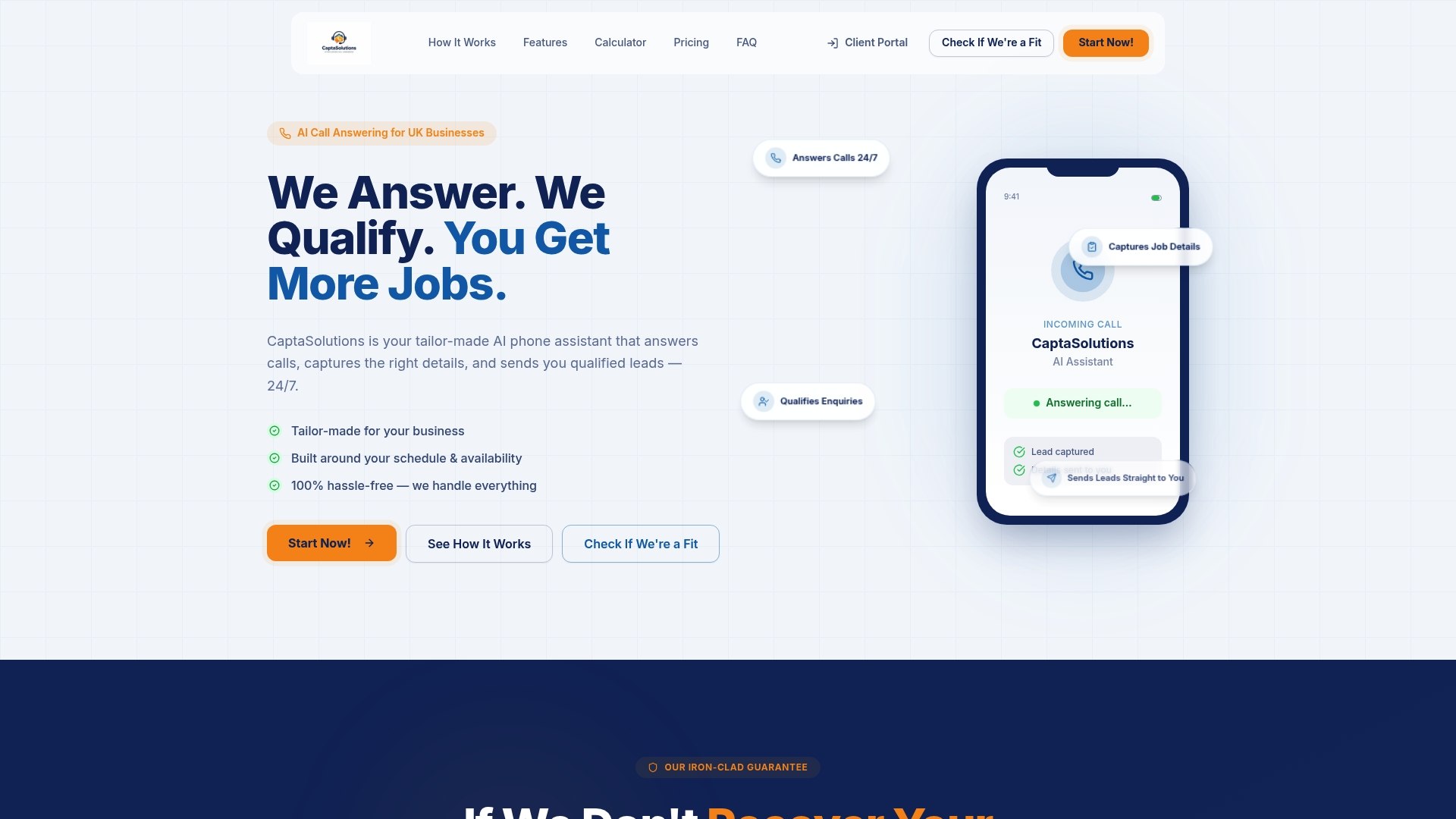
The AI captures the caller's details, qualifies the enquiry, and organises everything into your client portal. You review every lead and decide what to take on. For UK trades businesses, restaurants, salons, clinics, and service businesses, Captasolutions delivers the consistent, professional call experience that turns callers into customers and customers into advocates. Start your free 30-day trial today. No card required. No contract. Live within the hour.
FAQ
Does call answering really affect word of mouth?
Yes. Customer service drives word of mouth as a primary marketing channel, and phone interactions are among the most emotionally direct customer service touchpoints a business has.
What happens when a caller reaches voicemail?
78% of callers who reach voicemail do not call back. Most move to a competitor, and many share their negative experience with others.
How quickly should a call be resolved to maximise referrals?
Effective call handling resolves the caller's need within 90 seconds of answering. Booking, information delivery, or lead capture within that window significantly increases the likelihood of a positive recommendation.
Can AI call answering improve word of mouth?
AI-powered answering services deliver consistent, professional call experiences 24/7 without hold times. That consistency builds the kind of reliable reputation that customers recommend to others.
How do I measure whether call answering is improving my referrals?
Track referral source data, post-call satisfaction scores, and repeat booking rates. Cross-reference these with your call completion and missed call rates to identify direct links between call quality and referral growth.