

Many skilled tradespeople across the UK are losing work to rivals without fully understanding why. It is rarely about workmanship alone. The real reasons why UK tradespeople lose jobs to competitors run much deeper, touching on late payment crises, poor digital visibility, rising regulatory costs, and an ageing workforce that is slowly hollowing out the industry. If you have noticed enquiries drying up or clients choosing someone else, this article unpacks the specific pressures at play and gives you a clear picture of what to do about it.
Table of Contents
- Key takeaways
- Economic pressures squeezing UK tradespeople
- Digital visibility and why it costs you clients
- Operational and regulatory burdens on small trades businesses
- Practical strategies to stop losing work to rivals
- UK trades market trends and competitive gaps
- My honest take on what is really going on
- How Captasolutions helps you win and keep more jobs
- FAQ
Key takeaways
| Point | Details |
|---|---|
| Late payments drain competitiveness | Over half of UK tradespeople report rising late payments, with average debts of £2,023 disrupting cash flow and planning. |
| Poor online visibility loses you work | Competitors win jobs simply by being easier to find online, not because their work is better than yours. |
| AI misuse can hurt your rankings | Using AI-generated content carelessly risks Google penalties and erodes the trust clients place in your business. |
| Rising costs shrink your margins | National Insurance increases and minimum wage rises hit small trades businesses harder than larger firms. |
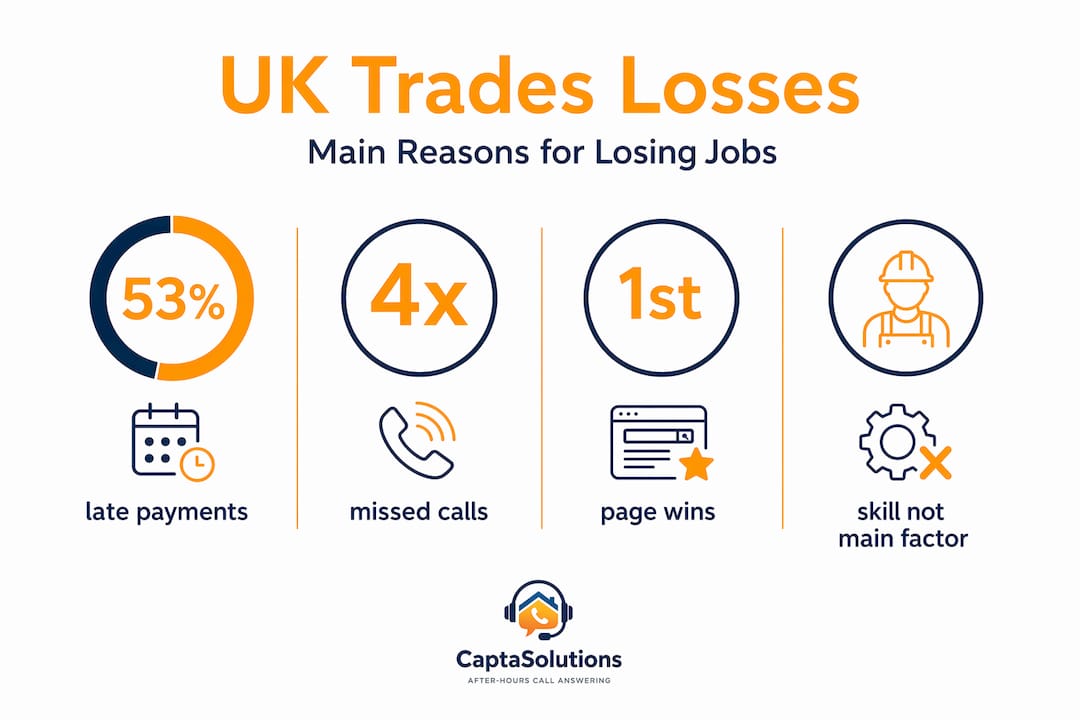
| Missed calls mean lost jobs | A single unanswered call can send a ready-to-book client straight to the next tradesperson on the list. |
Economic pressures squeezing UK tradespeople
The economic climate right now is genuinely tough for anyone running a trades business in the UK. Understanding these pressures is not just useful background. It explains directly why tradespeople face layoffs and why clients are increasingly difficult to hold onto.
Late payments are one of the most corrosive problems in the industry. 53% of UK tradespeople report an increase in late payments, and 42% have written off debts exceeding £500 in a single year. The average amount currently owed to a tradesperson sits at £2,023. That figure is not an inconvenience. It is a serious disruption to cash flow, to planning future projects, and to the ability to invest in materials, tools, or staff.
The cost-of-living crisis is feeding this problem from the customer side too. Homeowners and small commercial clients are stretching budgets further than before, negotiating harder on quotes, and sometimes simply not paying on time. 68% of tradespeople are now actively chasing late payments, with some forced to pursue clients through small claims court. Time spent chasing money is time not spent winning new work.
The wider labour market adds another layer of pressure:
- Vacancies in UK construction fell 32% in the period leading into 2026, signalling shrinking demand in some sectors
- 72% of construction firms report being affected by a shortage of skilled tradespeople
- Over one-third of the current trades workforce is aged 50 or above, creating a significant retirement cliff in the coming years
- New enquiries have dropped sharply across several trades, meaning fewer jobs are available and competition for each one intensifies
These factors combine to create a market where even experienced, reliable tradespeople find themselves losing work to competitors who simply present themselves better or price more aggressively.
Digital visibility and why it costs you clients
Here is a reality that most tradespeople have not fully accepted: you can be the best electrician, plumber, or builder in your area and still lose jobs consistently to someone with inferior skills but a stronger online presence. This is one of the most significant and least-discussed UK tradespeople job loss reasons in circulation today.
When a homeowner needs a tradesperson quickly, they search online. If your business does not appear on the first page of local results, you do not exist to that customer. Your competitor, who may have simply set up a Google Business Profile and collected a dozen genuine reviews, gets the call instead.

The problem is made worse by a growing trend of tradespeople using AI tools incorrectly to fill their websites with content. Google penalises scaled AI-generated content that lacks genuine expertise, local knowledge, or human oversight. A website stuffed with AI-written pages about "boiler services in [city]" with no real substance behind them is not just unhelpful. It actively damages your search rankings. The trap is that many trades marketing agencies are selling exactly this approach, and tradespeople are paying for it without realising the harm.
Specific digital pitfalls that are quietly costing tradespeople jobs include:
- Generic, AI-produced review responses that customers can recognise immediately as automated
- AI-generated images of "completed projects" that bear no resemblance to real work, destroying trust if discovered
- Over-reliance on AI quoting tools that miss site-specific pricing factors and produce inaccurate bids
- No genuine portfolio of real projects, real photos, and real client testimonials
Pro Tip: Take ten minutes this week to photograph your three most recent completed jobs and upload them directly to your Google Business Profile. Real photos from real work outperform any AI-generated image and signal authenticity to both Google and prospective clients.
Authentic, local, expert content is what ranks well and converts browsers into paying clients. Competitors who invest in this are winning the jobs that should be coming to you.
Operational and regulatory burdens on small trades businesses
The administrative side of running a trades business has become significantly more expensive and time-consuming. This operational weight is a direct driver of the impact of competition on trades, because it erodes the time and money you have available to market yourself and maintain client relationships.
| Pressure | Impact on tradespeople | Potential response |
|---|---|---|
| National Insurance at 15% above £5,000 | Higher employment costs for those with staff | Review staff structure and consider direct contractor arrangements |
| National Living Wage rising to £12.21 | Squeezed margins on labour-intensive jobs | Reprice regularly and build wage increases into quotes |
| Late payment admin | Time lost chasing invoices instead of winning work | Introduce upfront deposits and staged payment schedules |
| Planning and insurance delays | Projects stall, cash flow is disrupted | Build contingency time into project agreements |
Employers now pay 15% National Insurance on earnings above £5,000 per employee, with the National Living Wage having risen to £12.21 per hour. For a sole trader or small business with one or two employees, these changes land heavily. The growing admin and financial burden is described by many in the industry as a "death by a thousand cuts" scenario. Each individual change is manageable in isolation. Together, they push tradespeople out of the market.
Working through large contracting companies adds another problem. Contracting through intermediaries creates a race to the bottom on price, with tradespeople bearing the financial risks of the job while the client relationship stays firmly in the hands of the middleman. When work dries up, the tradesperson has no direct connection to the customer and nowhere to turn.
Pro Tip: If you currently rely on a single agency or contractor for most of your work, dedicate one hour per week to building direct relationships with past clients and local homeowners. It takes time, but the jobs that come through direct contact pay better and come with far less risk.
The trades industry image problem also plays a role here. Perceived lack of respect for the profession, combined with poor training standards in some areas, makes it harder to charge premium rates and harder to attract the next generation into trades at all.
Practical strategies to stop losing work to rivals
Regaining competitive ground does not require a complete overhaul of your business. It requires focused action in a small number of areas that have an outsized impact on the jobs you win and retain.
-
Build your direct client base. Independent tradespeople who invest in direct client relationships consistently outperform those who rely on agencies or platforms. Collect contact details from every job you complete. Follow up after the project. Be the first call they make next time.
-
Use fixed pricing where possible. 90% of customers accept fixed prices when the rationale is explained clearly and politely. Fixed pricing reduces payment disputes, sets clear expectations, and protects your cash flow from the open-ended negotiation that erodes margins.
-
Require deposits upfront. A 25-50% deposit before work begins filters out unreliable clients and protects you from the most common late payment scenarios. Customers who refuse to pay a reasonable deposit are often the same ones who dispute the final invoice.
-
Answer every enquiry, including calls. The benefits of professional call answering for tradespeople are well-documented. When you are on a job and a new client calls, that call goes unanswered and the client moves on. Understanding the examples of missed tradesperson calls reveals just how often this happens and what it costs in lost revenue.
-
Invest in genuine online content. Post real project photos, write honest descriptions of the work you do in your local area, and respond personally to every review. This is what authentic local content looks like, and it consistently outranks AI-generated alternatives.
Pro Tip: Ask every satisfied client to leave a Google review immediately after the job is done, while the experience is fresh. Send them a direct link to your review page by text. One genuine review per week builds a profile that competitors without this habit simply cannot match.
Tradespeople who adopt even three of these five habits consistently report more stable work, better-paying clients, and significantly less stress around cash flow.
UK trades market trends and competitive gaps
Understanding where the UK trades market is heading helps you position yourself in areas where competitors are absent or weak. The challenges for UK tradespeople are not uniform across the country. Regional imbalances are significant.
Some areas of the UK have acute shortages of specific trades, particularly in regions where the workforce is ageing fastest. Over one-third of trades workers are now aged 50 or above, and entire regions will face genuine shortfalls in plumbers, electricians, and heating engineers within the next decade. If you are in one of those regions, the competitive picture is actually more favourable than national headlines suggest.
Competitors who are winning jobs right now are typically doing a handful of things differently:
- They maintain an active Google Business Profile with fresh photos updated monthly
- They respond to every enquiry within two hours, whether by call, text, or email
- They offer clearly scoped, fixed-price quotes that remove ambiguity for the client
- They diversify their service offerings to capture adjacent revenue streams in quieter periods
- They position themselves as local experts rather than generalists competing on price alone
Policy changes also matter here. The construction and trades sector is being shaped by net-zero targets, planning reform, and housing policy shifts. Tradespeople who upskill in heat pump installation, EV charging, and retrofit work are positioning themselves ahead of a significant wave of demand that competitors without those qualifications cannot serve.
The gap between tradespeople losing work and those winning it is not mainly about skill. It is about visibility, responsiveness, and the ability to manage the business side as effectively as the tools in your van.
My honest take on what is really going on
I have spent a considerable amount of time looking at the data behind why UK tradespeople lose jobs, and I keep coming back to the same uncomfortable truth: most of the losses are avoidable.
The tradespeople I see struggling are not struggling because they do a poor job on site. They are struggling because they are running a 21st-century business with 1990s habits around communication and marketing. The phone rings while they are under a sink, the client hangs up, and the job goes to whoever answered.
The over-automation trend worries me too. I understand the appeal of using AI to write website content, generate quotes, and manage reviews. But AI misuse leads to penalties and a steady erosion of the trust that is genuinely hard to rebuild. Clients notice when responses feel automated. They choose the tradesperson who feels like a real person who cares.
What I have found actually works is simpler than most people expect. Answer every call. Quote honestly. Follow up after jobs. Build your reputation one genuine review at a time. The tradespeople who do these things consistently are not losing jobs to competitors. They are the competitors everyone else is losing to.
— Daniel
How Captasolutions helps you win and keep more jobs
Missing a call while you are on a job is one of the most common and costly ways tradespeople lose clients to competitors. Captasolutions is an AI-powered call answering service built specifically for UK businesses that cannot afford to let enquiries slip away.
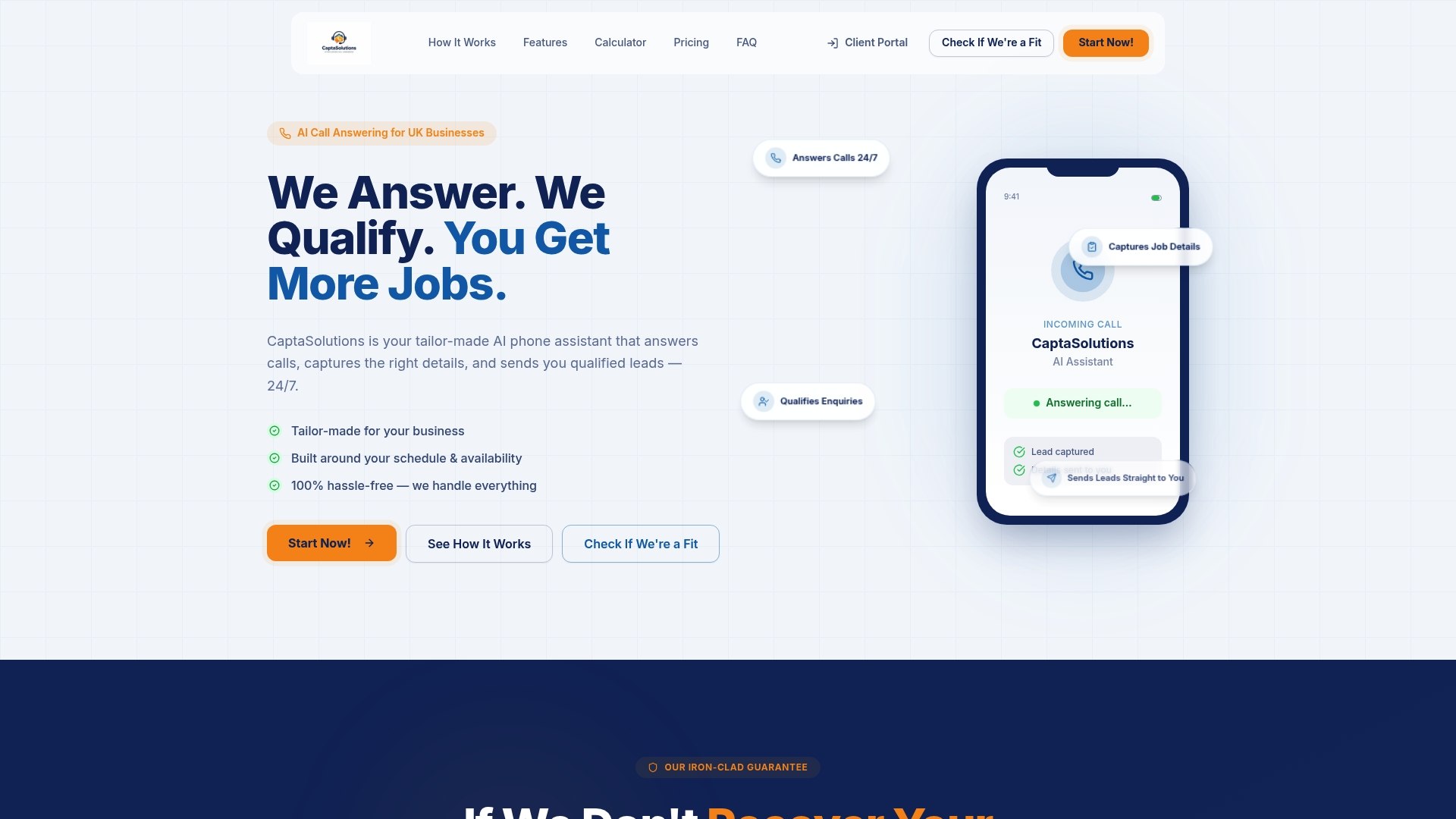
When you are on a job, Captasolutions answers every call in your business name, captures the caller's details, qualifies the enquiry, and organises everything into your client portal. You review every lead and decide what to take on. No missed opportunities. No lost revenue. If you want to grow your business by answering calls more effectively, Captasolutions makes it straightforward. Visit captasolutions.co.uk to start your free 30-day trial today. No card required. No contract. Live within the hour.
FAQ
Why do UK tradespeople lose jobs to competitors?
UK tradespeople most commonly lose jobs to competitors due to poor online visibility, unanswered calls, late payment disputes, and over-reliance on agencies rather than direct client relationships. Workmanship quality is rarely the primary factor.
How does poor digital presence affect tradespeople's competitiveness?
If potential clients cannot find you in local search results or see genuine reviews and project photos, they will contact a competitor instead. Google also penalises AI-generated website content, which harms rankings for tradespeople who use it carelessly.
What is the biggest financial threat to UK tradespeople right now?
Late payments represent the most immediate financial threat. The average amount owed to a UK tradesperson currently stands at £2,023, and 42% have written off debts above £500 in a single year, directly disrupting their ability to compete and plan ahead.
Can missing phone calls really cost tradespeople work?
Yes. When a client calls and gets no answer, they move on to the next available tradesperson immediately. Professional call answering services mean every enquiry is captured, even when you are on site and cannot pick up.
How can tradespeople reduce the impact of competition in the current market?
Building a direct client base, using fixed pricing, requiring upfront deposits, maintaining an active online presence, and answering every enquiry promptly are the most effective steps tradespeople can take to reduce the impact of competition and retain more clients.