
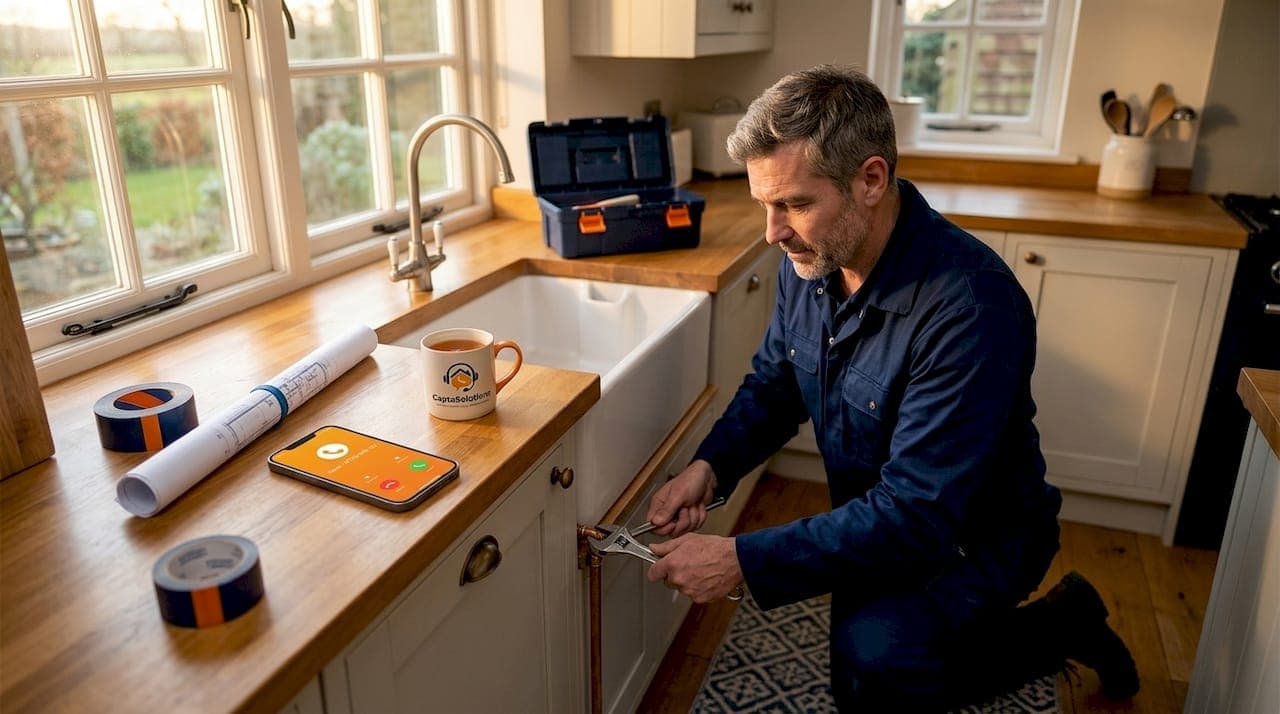
UK tradespeople miss between 15 and 41% of inbound calls on average, and most of those calls are never returned. That is not a minor operational issue. It is a steady drain on revenue that most tradespeople do not even notice because they are too busy on the job to track it. Examples of tradesperson missed calls range from the roofer with both hands on a ladder to the plumber who sees an unknown number and lets it ring out. Each scenario looks different on the surface, but the outcome is almost always the same. The customer moves on.
Table of Contents
- Key takeaways
- Examples of tradesperson missed calls: what each scenario really costs
- Real-world missed call scenarios for UK tradespeople
- Comparing methods to handle missed calls
- Practical tips for better missed call management
- My honest take on missed calls in the trades
- How Captasolutions helps tradespeople stop losing jobs to missed calls
- FAQ
Key takeaways
| Point | Details |
|---|---|
| Missed calls are costly | Missing just two callbacks a week can cost a tradesperson £25,000 or more annually in lost revenue. |
| Speed wins the job | Contacting a lead within one minute improves conversions by nearly 400% compared to calling back later. |
| Voicemail rarely works | 85% of customers who reach voicemail hang up without leaving a message or ever calling back. |
| Automation fills the gap | Automated text-back and AI call answering systems can recover multiple missed jobs per week. |
| A callback system is not optional | Tradespeople without a structured response process lose leads silently, with no record it ever happened. |
Examples of tradesperson missed calls: what each scenario really costs
Before looking at specific missed call scenarios, it helps to understand the framework that determines whether a missed call becomes a lost job. Not every missed call carries the same risk, and recognising the difference between call types can shape how you prioritise your response.
The single biggest factor is urgency. For emergency trades like plumbing, heating, and electrical, the conversion window is minutes. A homeowner with a burst pipe is not waiting an hour for a callback. They are calling the next number on Google before you have even finished the job you are on. For non-emergency enquiries such as a new bathroom quote or fence repair, the window is wider, but not by much. Most customers expect a response the same day.
Customer impatience is also higher than most tradespeople assume. Speed to lead matters more than persuasion. The tradesperson who calls back first wins the job, not necessarily the one with the best price or the most experience. This is a reality that traditional working habits make very difficult to accommodate.
Other factors that increase missed call risk include:
- Working alone with no admin support to cover the phone
- High inbound call volume during peak seasons like winter for heating engineers
- Relying on a single mobile number with no overflow routing
- Having no system to log or flag missed calls for follow-up
Pro Tip: Check your missed calls log at the end of each day and note how many are from numbers you do not recognise. Those are almost certainly new enquiries, not existing customers, and they represent revenue that has already walked out the door.
Real-world missed call scenarios for UK tradespeople
These are the tradesperson call examples that play out every day across the UK. Each one reveals a different root cause and a different type of opportunity lost.
1. On-site and hands full
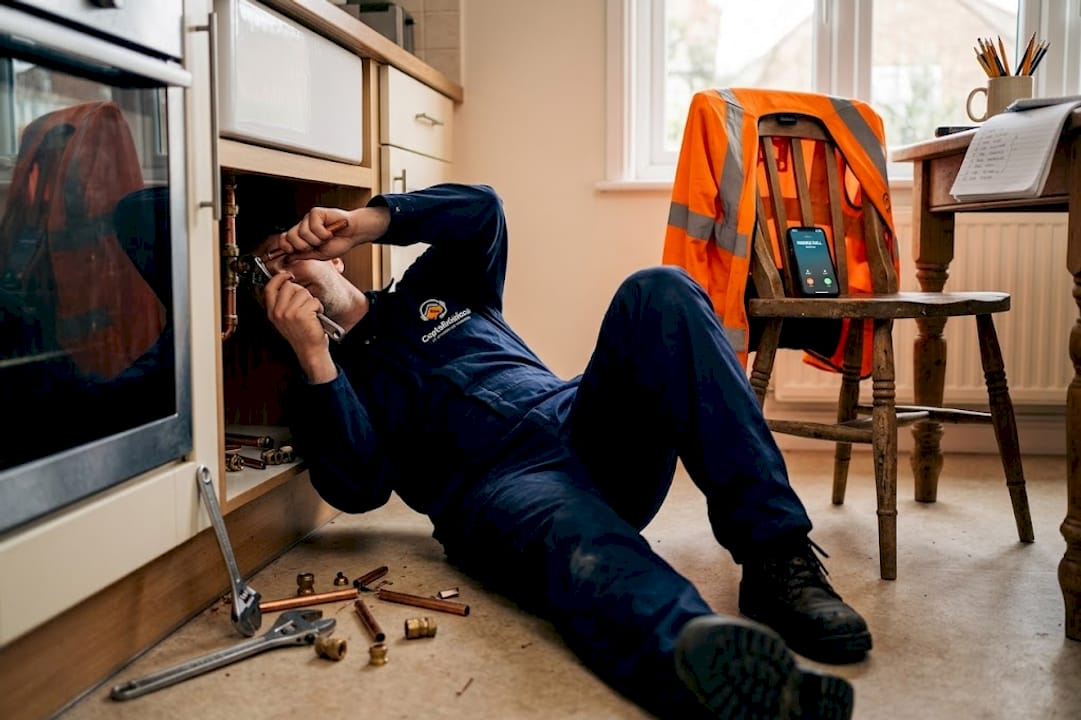
A gas engineer is mid-installation under a kitchen unit when the phone rings. The phone is in his jacket, which is on a chair in the hallway. By the time he gets to it, the caller has hung up. Tradespeople physically unable to answer during jobs is the most common missed call scenario in the trades. There is no malice, no negligence. The job demands full attention, and the phone loses every time.
2. The delayed callback
A tiler finishes a job at 4pm, checks his missed calls, and sees three numbers he does not recognise from earlier in the day. He calls them back at 5pm. Two go to voicemail. One answers, says they have already booked someone else, and hangs up. This is what losing leads after 30 minutes looks like in practice. The work was there. The timing was not.
3. Unknown number ignored
A decorator sees an unknown number flash up mid-job and decides not to answer, assuming it is a spam call or a salesperson. It was a property manager with three flats to redecorate. This is one of the most expensive missed call scenarios because it recurs constantly and leaves no trace. The tradesperson never knows what they missed.
4. Voicemail dead ends
85% of customers who reach voicemail hang up without leaving a message or calling back. A sole-trader electrician with a professional voicemail greeting still loses the majority of callers who reach it. The message is clear and well-recorded. It does not matter. Customers treat voicemail as a dead end, not a communication channel.
5. Busy signal or both lines engaged
A heating engineer running a small team during a cold snap receives multiple simultaneous calls. One line is in use for a supplier. The mobile is on a job. Two inbound enquiries hit a busy tone and disconnect. Neither calls back. During peak seasons, this common missed call issue can repeat dozens of times per week.
6. A partner or family member answers inconsistently
Some tradespeople rely on a partner at home to take messages during the day. The results vary widely. On a good day, the caller gets a friendly voice, a name is taken, and the job gets quoted. On a bad day, the call goes to a distracted household, the message is incomplete, and the follow-up never happens. Inconsistent message-taking is a professional risk, even when the intention is good.
Pro Tip: If a family member is taking calls, create a simple written script for them to follow. Name, number, job description, and postcode. Four fields. That is all you need to call back with confidence and convert the lead.
7. The after-hours enquiry with no coverage
A homeowner spots a roof problem on a Sunday afternoon and calls three local roofers. None answer. The first one to call back Monday morning wins. If that is not you, and you have no system to capture the Sunday enquiry, you have already lost. Call answering benefits for UK tradespeople include covering exactly these out-of-hours windows where competitors stay silent.
Comparing methods to handle missed calls
Different approaches to managing missed calls offer very different results. Here is how the main options compare.
| Method | Cost | Availability | Lead capture quality | Consistency |
|---|---|---|---|---|
| Partner or family member | Low | Limited | Variable | Poor |
| Second phone line in van | Low | During work hours | Moderate | Moderate |
| Paid human answering service | Medium to high | Business hours | Good | High |
| Automated SMS text-back | Low | 24/7 | Moderate | Very high |
| AI voice receptionist | Low to medium | 24/7 | Excellent | Very high |
A second mobile in the van helps if you can pull over to answer it, but most tradespeople cannot mid-job. Paid human answering scales with call volume but the costs rise sharply and the service cannot book appointments directly. Automated SMS text-back systems engage customers within seconds, keeping leads warm while you finish the job. That alone can recover two to three missed jobs per week for a sole trader.
AI voice receptionists go further. They answer in your business name, qualify the enquiry, and log everything to a client portal. You review the leads and decide what to take on. For tradespeople working alone, this is the only approach that genuinely covers all hours without ongoing manual effort.
Key considerations when choosing a method:
- How many calls do you typically receive per week?
- What proportion arrive outside your working hours?
- Do you need appointment booking or just message capture?
- What is the cost of one lost job compared to the cost of the solution?
Practical tips for better missed call management
Good tradesperson communication tips start with the basics and build from there. Most tradespeople can reduce their missed call losses significantly with a few targeted changes.
Set up an automatic SMS reply. When a call goes unanswered, an instant text message to the caller reassures them and keeps the conversation alive. A message as simple as "Hi, it's [Your Name] from [Business Name]. I missed your call and will ring you back shortly" buys you time without losing the lead. How to answer calls during business hours effectively covers the practicalities of setting this up.
Use caller ID to triage your callback list. During a break, you have five minutes. Spend it calling back the unknown numbers first. Existing customers will usually leave a message or text. New enquiries will not. Unknown numbers are your highest-priority callbacks.
Integrate a CRM or call log. Even a simple spreadsheet with date, number, and status (called back, converted, not answered) gives you visibility on missed call issues that would otherwise be invisible. Smart missed call management includes alerts, callback options, and CRM integration that automates this process entirely.
Record a professional voicemail that directs callers elsewhere. Rather than a generic "leave a message" prompt, direct callers to send a text or visit your website to submit an enquiry. This gives impatient customers a faster route and reduces the number who simply hang up.
Pro Tip: Your voicemail greeting is your last line of defence. Record it somewhere quiet, mention your business name clearly, and give callers one specific alternative action. "Text me on this number" is more effective than "I'll call you back as soon as possible."
For after-hours enquiries, treat them as your highest-value opportunity. Competitors who do not have after-hours coverage will always lose those leads. If you do have coverage via AI or automation, you win by default. How to cover business calls without staff explains the options available to sole traders and small teams in the UK.
My honest take on missed calls in the trades
I have worked with a lot of tradespeople over the years, and the pattern is almost always the same. They know they miss calls. They intend to call back. And then the day happens, and three quarters of those callbacks never get made.
What I have found genuinely surprising is how few tradespeople have looked at the numbers. Missing two callbacks a week does not feel catastrophic in the moment. Over a year, it is £25,000 to £35,000 in lost revenue after you factor in lifetime value and referrals. That is a van. That is a new set of tools. That is someone's apprentice wages.
The uncomfortable truth I have come to believe is that speed of response matters more than skill or price in winning new work. I have seen average tradespeople beat brilliant ones repeatedly just by being first to call back. The customer does not have enough information at that stage to compare skill levels. They go with whoever made them feel attended to first.
My view on automation has shifted too. I was sceptical at first, like most people. It felt impersonal. But the tradespeople who have adopted AI call answering consistently tell me the same thing: their customers do not care who answers, they care that someone does. Being the tradesperson who always gets back to people, even at 9pm on a Sunday, changes how customers talk about you. It generates reviews and referrals that nothing else quite matches.
If you take one thing from this, audit your missed calls from the past month. Count how many came from numbers you have never called back. That number is your starting point.
— Daniel
How Captasolutions helps tradespeople stop losing jobs to missed calls
Every missed call is a potential job given to a competitor. Captasolutions is an AI-powered call answering service built specifically for UK businesses that cannot afford to let that happen.
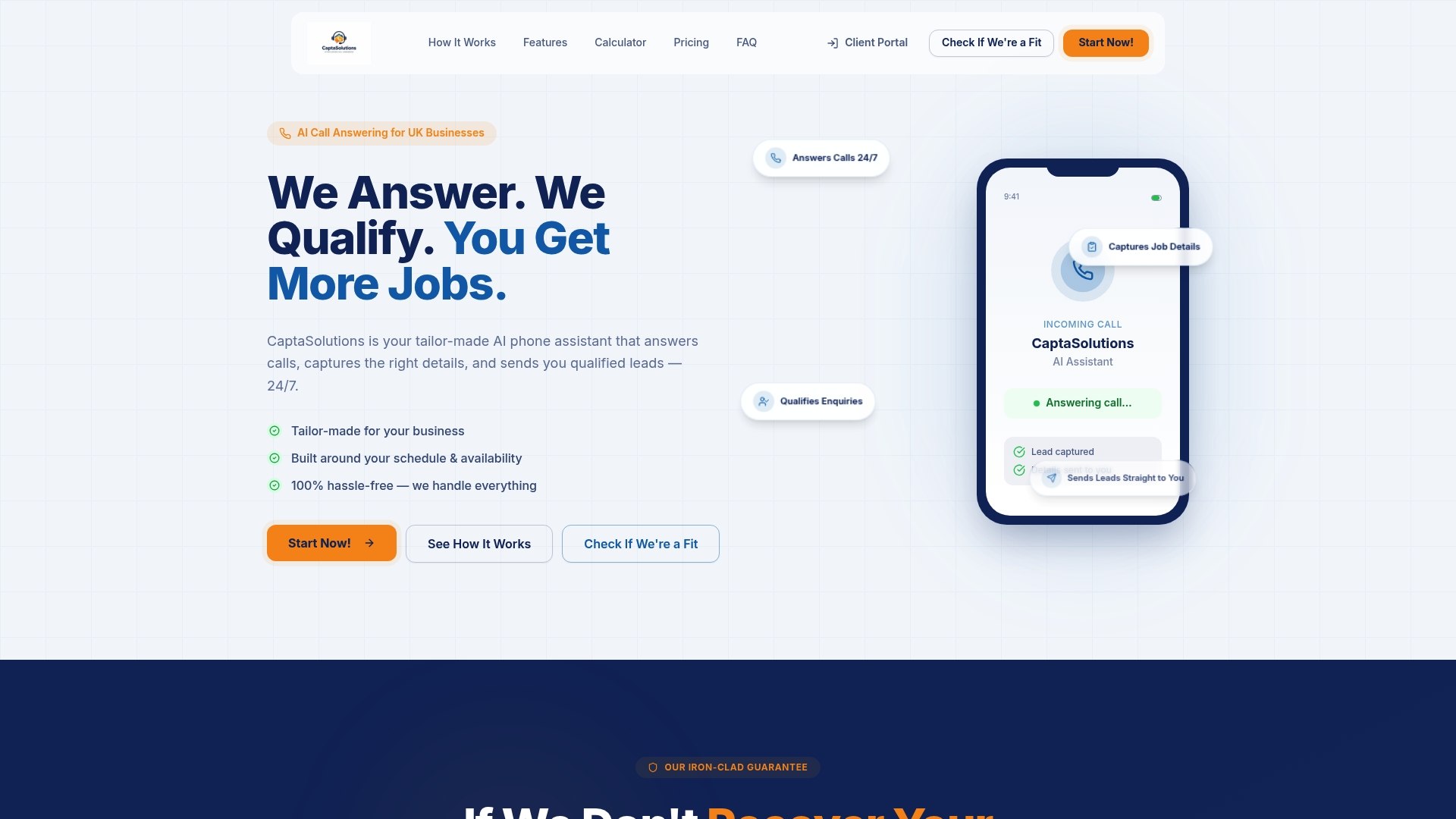
When you are on the tools, Captasolutions answers every inbound call in your business name, 24 hours a day, 7 days a week. It captures the caller's details, qualifies the enquiry, and organises everything into your client portal. You review the leads when you are ready and decide what to take on. No voicemail, no missed opportunities, no guesswork. Tradespeople who automate call answering see lower missed call rates, better customer satisfaction, and measurable improvements in revenue retention.
Start your free 30-day trial at captasolutions.co.uk. No card required. No contract. Live within the hour.
FAQ
How many calls do UK tradespeople typically miss?
UK tradespeople miss between 15 and 41% of inbound calls on average, with many never returned. A plumber, for example, can miss as many as 41% of enquiry calls during busy periods.
Why is calling back quickly so important?
Contacting a lead within one minute improves conversions by nearly 400%. After 30 minutes without contact, the chance of converting that lead drops dramatically, particularly for emergency trades like plumbing and heating.
Do customers leave voicemail messages for tradespeople?
Rarely. Research shows that 85% of customers who reach voicemail hang up without leaving a message or calling back, which means voicemail alone is not a reliable way to capture missed enquiries.
What is the best way to handle missed calls as a sole trader?
An automated SMS text-back combined with an AI voice receptionist gives the most consistent results. This combination keeps leads warm instantly and captures enquiry details even when you are on a job or outside working hours.
How much revenue can missed calls cost a tradesperson annually?
Missing just two callbacks a week can cost a tradesperson between £25,000 and £35,000 annually, once job value, repeat business, and referrals are factored in.