

AI phone answering: how it manages concurrent booking calls
The most reliable way to handle multiple booking calls simultaneously is AI phone answering. When a call arrives, the system places it in a queue with hold music while sending real-time notifications to available agents or routing the call automatically. No caller hears a busy signal. No booking opportunity disappears because you were already on the line.
Key capabilities that make this work:
- Call queuing and hold: incoming calls wait in a managed queue rather than hitting voicemail or a dead tone
- Intelligent routing: calls are directed based on caller intent, so a booking enquiry reaches the right person immediately
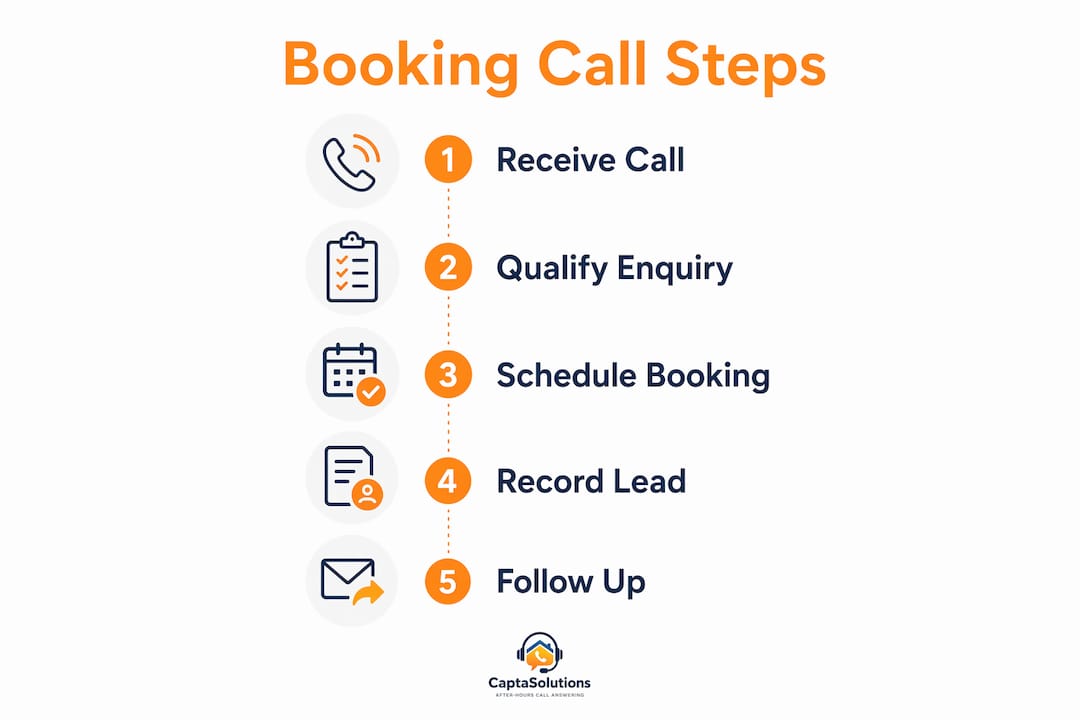
- Real-time lead capture: caller details and enquiry type are recorded automatically during every call
- 24/7 coverage: AI answering operates outside business hours, capturing bookings when staff are unavailable
- Client portal organisation: qualified leads are logged and accessible, so nothing gets lost between calls
Captasolutions answers every call in your business name, qualifies the enquiry, and organises leads in a client portal. Trusted by UK trades businesses, salons, clinics, and hospitality venues, it goes live within the hour with a free 30-day trial and no contract.
Table of Contents
- Why managing multiple booking calls matters for your revenue
- How to integrate AI answering with your existing booking workflow
- AI phone answering vs. live receptionists for concurrent calls
- Common challenges with AI answering technology and how to address them
- Data security and privacy when using AI phone answering
- Measuring how well your AI answering system performs
- Captasolutions: AI call answering built for UK businesses
- Key takeaways
Why managing multiple booking calls matters for your revenue
Missing a booking call is not a minor inconvenience. That caller moves on to the next available business. Effective call management connects call outcomes directly to conversion rates and revenue, turning what looks like an operational task into a measurable business driver.
The common misconception is that call handling is simply about answering the phone. The real value lies in linking call metrics to booking conversions and identifying which call windows generate the most revenue. Scheduling your most capable staff during peak booking periods, for example, produces better outcomes than simply adding more people to the rota.
Scaling with AI rather than headcount keeps costs controlled. AI tools handle routine qualification and data capture, freeing staff for complex or high-value interactions. For home service businesses managing seasonal demand spikes, this approach is particularly effective. Leapify Media works with home service providers on exactly this kind of growth infrastructure.
How to integrate AI answering with your existing booking workflow
Start by mapping your current call flow before changing anything. Identify where calls are dropped, where enquiries go unqualified, and which booking types need human follow-up. AI answering works best when it slots into a defined process rather than replacing an undefined one.

Feed your AI system a clear knowledge base: your services, pricing, availability windows, and common caller questions. The more specific the input, the more accurately the system qualifies calls before handoff. AI-assisted routing that matches callers to the right team based on intent reduces unnecessary transfers and improves the caller experience. For a practical walkthrough, the small business guide to AI call answering covers the setup process in detail.
Pro Tip: Review your client portal weekly for the first month after going live. Early patterns in call types and missed enquiries will tell you exactly where to refine your routing rules.
AI phone answering vs. live receptionists for concurrent calls
A live receptionist handles one call at a time. During a busy period, that means callers two, three, and four are waiting or leaving. AI answering handles concurrent calls without a ceiling, routing each one simultaneously without any caller experiencing a delay caused by another.
Cost is the other practical difference. A full-time receptionist carries salary, holiday, and sick cover costs. AI answering runs continuously at a fixed monthly cost with no gaps in coverage. The trade-off is nuance: complex or sensitive calls still benefit from a human touch, which is why the strongest setups use AI for initial qualification and route edge cases to staff.
Common challenges with AI answering technology and how to address them
AI systems occasionally misinterpret caller intent, particularly with strong regional accents or unusual service requests. The fix is straightforward: review flagged calls in your portal regularly and update your knowledge base with the phrases and queries your callers actually use.
Integration with existing booking software can create friction if the systems do not communicate cleanly. Choose an AI answering service that supports your current booking platform or offers a client portal that your team can work from directly. Caller trust is another factor. Some callers prefer speaking to a person. A well-configured AI that answers in your business name, uses natural language, and transfers smoothly when needed addresses this without friction.
Data security and privacy when using AI phone answering
Any AI phone answering service handling UK caller data must comply with the UK General Data Protection Regulation (UK GDPR). This means caller information collected during qualification must be stored securely, accessed only by authorised users, and retained only as long as necessary.
Before deploying any service, confirm that call recordings and lead data are encrypted in transit and at rest. Check where data is stored: UK or EU-based servers reduce regulatory complexity. Transparency with callers matters too. A brief statement at the start of a call that it may be recorded satisfies both legal requirements and caller expectations.
Measuring how well your AI answering system performs
The metrics that matter most are call answer rate, call abandonment rate, lead capture rate, and booking conversion rate. Real-time dashboards that refresh every 15–60 seconds allow supervisors to spot volume spikes and act before queues build. Tracking these figures weekly gives you a clear picture of whether your AI setup is converting enquiries into bookings or simply answering calls without outcome.
Tie agent or system goals to business outcomes rather than call volume alone. A target of resolving enquiries in a way that drives high first-contact resolution is more useful than counting calls handled. For a detailed look at qualifying calls effectively, the booking call qualification guide covers the process from first contact to confirmed lead.
Captasolutions: AI call answering built for UK businesses
Every missed call is a missed booking. Captasolutions gives UK businesses a 24/7 AI phone answering service that answers in your business name, captures caller details, qualifies the enquiry, and organises every lead in your client portal. You stay in control without being tied to the phone.
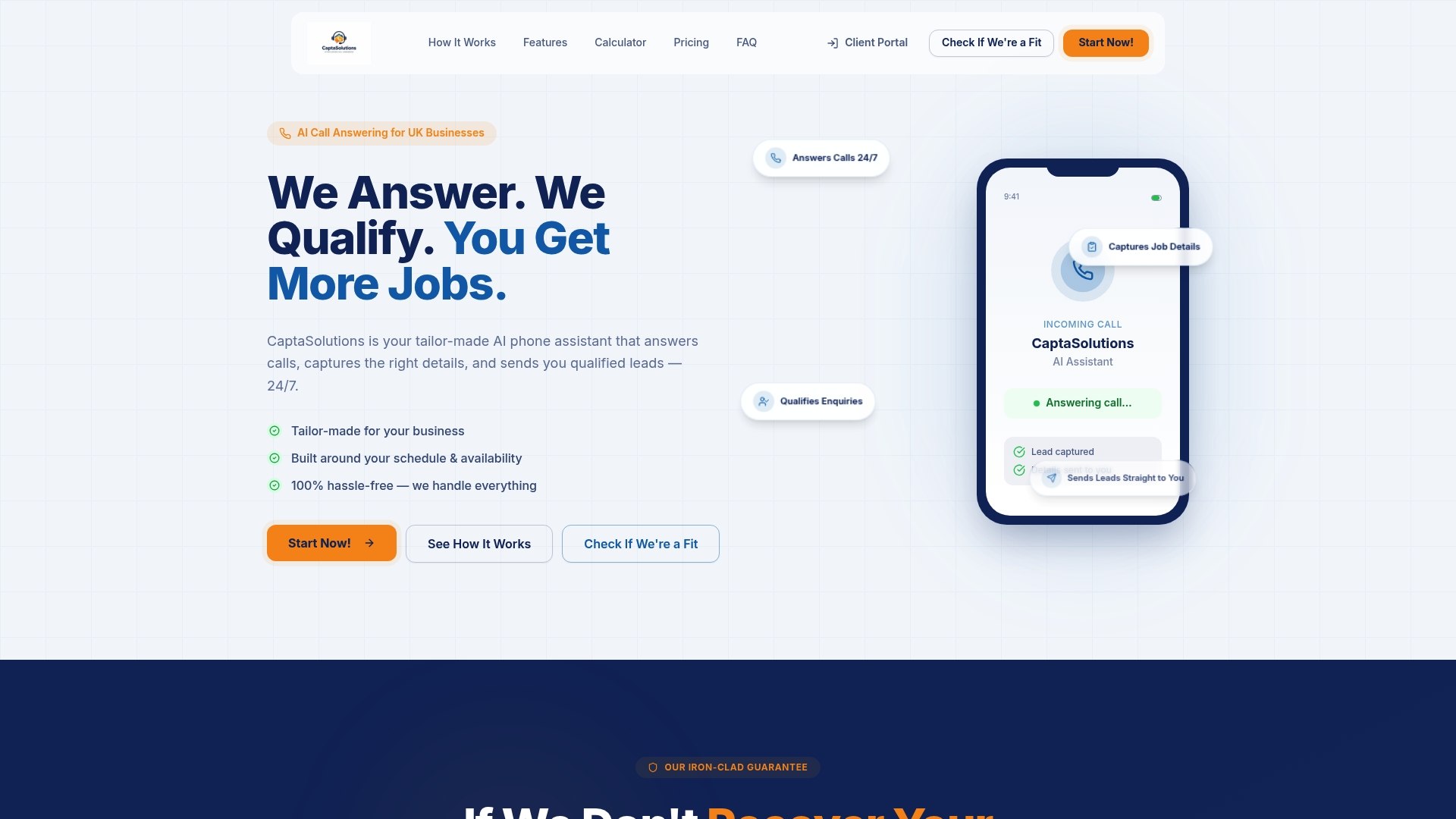
No contract. No card required. Live within the hour. Start your free 30-day trial today and stop losing bookings to a busy signal.
Key takeaways
AI phone answering is the most practical way for UK businesses to handle multiple booking calls simultaneously, combining 24/7 coverage with real-time lead qualification and no increase in staffing costs.
| Point | Details |
|---|---|
| Concurrent call handling | AI queues and routes multiple calls at once, so no caller hears a busy signal. |
| Revenue connection | Linking call outcomes to conversion rates turns call management into a measurable business tool. |
| Integration first | Map your existing call flow before deploying AI to get accurate routing from day one. |
| Data compliance | UK GDPR applies to all caller data; confirm encryption and UK-based storage before going live. |
| Captasolutions | Answers every call in your business name, 24/7, with a free 30-day trial and no contract. |