

A tradesperson call handling solution is a system that manages incoming client calls on your behalf, capturing enquiry details and qualifying leads while you work on site. Whether you are a plumber, electrician, or builder, missed calls directly translate to lost jobs. Services like Captasolutions and AllDayPA are built specifically to prevent that. The core problem is simple: you cannot answer your phone when you are under a sink or on a roof. A proper call management system for tradespeople solves that without requiring you to change how you work.
What tools form an effective tradesperson call handling solution?
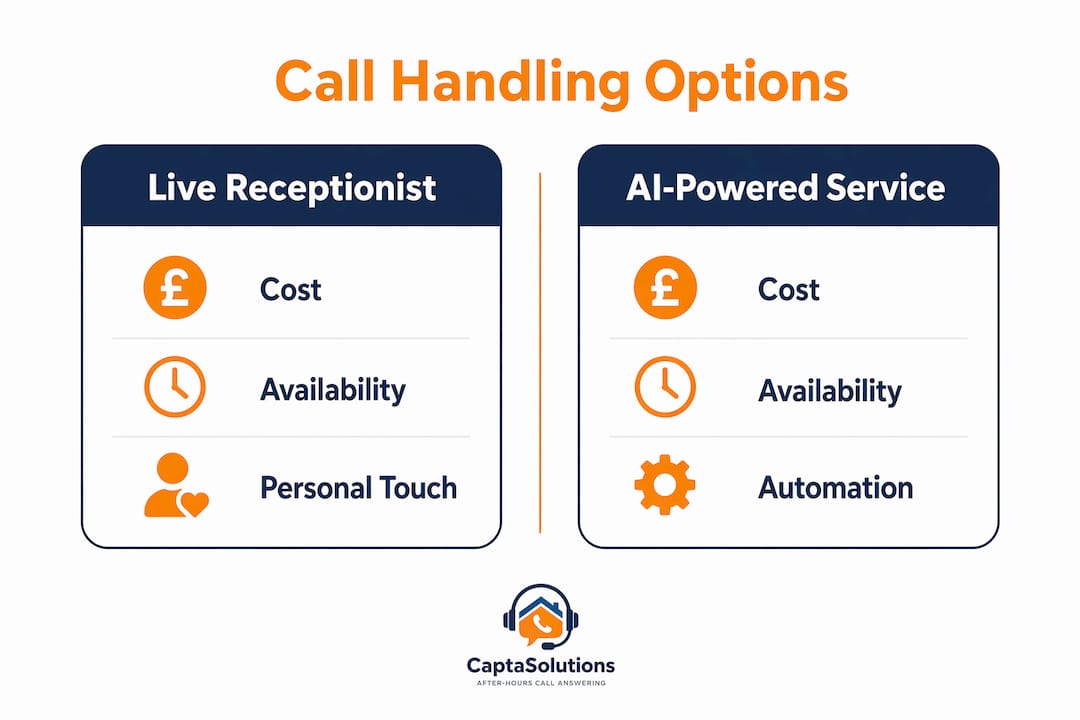
The two main options are live answering services and automated systems. Live receptionists and virtual assistants provide personalised contact and capture complex job details more accurately than pure automation. Automated systems, including AI-powered call answering, handle high volumes at lower cost and operate around the clock without staffing constraints.

Phone support suits urgent problems and back-and-forth clarifications best. Email handles warranty queries and documentation. Live chat works for quick status checks. A well-built trades call response system uses phone as the primary channel and routes other contact types accordingly.
Key features to look for in any call handling service for contractors include:
- Call forwarding to mobile: Routes calls to your phone when you are available, and to the answering service when you are not.
- Real-time job logging: Every call is recorded with caller name, number, and job details immediately.
- CRM integration: Call data feeds directly into your job management software, removing manual entry.
- 24/7 coverage: Specialised providers cover calls outside usual hours, capturing jobs from customers who ring in the evening or at weekends.
- Lead qualification: The service filters genuine enquiries from time-wasters before passing them to you.
Pro Tip: Set up a dedicated business number that routes through your call handling service. This keeps personal and business calls separate and gives the answering service full control over every inbound business enquiry.
| Feature | Live receptionist | AI-powered service |
|---|---|---|
| 24/7 availability | Depends on provider | Yes, always on |
| Job detail capture | High accuracy | Good, improves with scripting |
| Cost | Higher monthly fee | Lower, often per-call pricing |
| Personalisation | High | Moderate |
| Setup speed | Days to weeks | Often live within hours |
How to implement a call handling solution step by step
Getting set up does not need to take long. Captasolutions, for example, states it can have a service live within the hour. The key is preparing properly before you switch anything on.
-
Assess your call volume and call types. Count how many calls you receive in a typical week. Identify which are new enquiries, which are existing clients, and which are suppliers. This tells you what your answering service needs to handle.
-
Choose between human or automated answering. If your enquiries are complex or involve detailed scoping conversations, a live receptionist adds more value. If you need 24/7 coverage at low cost, an AI-powered service like Captasolutions is the practical choice.
-
Set up call routing. Configure your business number to forward to the answering service when you do not pick up within a set number of rings. Most providers support simple call divert from any UK mobile or landline.
-
Write your call script. Tailored scripts prevent generic replies and give callers a professional experience. Include your business name, the types of work you cover, your service area, and any questions you need answered before taking a job.
-
Define escalation paths. Decide which call types need immediate callback from you, such as gas leaks or flood damage, and which can wait until the end of the working day. Make these rules explicit in your script.
-
Test before going live. Call your own number from a different phone and run through several scenarios. Check that job details are captured correctly and that the escalation rules trigger as expected.
-
Review after the first two weeks. Look at the call logs, check whether any genuine leads were missed or mishandled, and adjust the script accordingly.
Pro Tip: Tell your existing clients about the new system before you switch it on. A brief text message saying "I now use a call answering service, so your call will always be answered" prevents confusion and builds confidence.
What are common pitfalls in tradesperson call handling?
The most common mistake is treating speed as the only measure of success. Effective call handling must prioritise actionable responsiveness, not just answering quickly. A call answered in two rings but handled poorly loses the job just as surely as a missed call.
Other frequent problems include:
- Generic scripts: A script that does not mention your trade, your service area, or your typical job types sounds unprofessional. Clients notice immediately.
- Poor information capture: If the answering service only takes a name and number, you are calling back blind. The script should capture the job type, location, urgency, and preferred callback time.
- No escalation procedure: Without clear rules, every call gets treated the same. A burst pipe at 11pm needs a different response than a quote request for a kitchen refit.
- Ignoring contact preferences: Some clients prefer a text callback rather than a phone call. Capturing this preference during the first call improves the experience significantly.
- Failing to review logs: Call logs are only useful if you read them. Set aside ten minutes each morning to check the previous day's calls and flag anything that needs follow-up.
"Responsiveness should be measured by how well the service solves customer problems, not by speed alone." — Value Tools Co
Self-service resources such as FAQs on your website also reduce routine enquiries. If clients can find your pricing, service area, and booking process online, fewer of them ring with basic questions, freeing your answering service to focus on genuine leads.
How does call handling improve customer satisfaction and job conversion?
Tradespeople lose significant business through missed calls and slow enquiry processing. Capturing every call directly increases the number of jobs you convert. A customer who rings and gets no answer typically calls the next tradesperson on their list within minutes.
Professionalism is the second benefit. A caller who reaches a well-scripted answering service rather than voicemail perceives your business as organised and reliable. That perception influences whether they book you or a competitor.
The table below shows how specific features connect to customer outcomes:
| Feature | Customer outcome |
|---|---|
| 24/7 call answering | No lost leads outside business hours |
| Accurate job detail capture | Faster, better-informed callbacks |
| Escalation for urgent calls | Clients with emergencies feel prioritised |
| Callback time preference capture | Clients receive contact on their terms |
| Lead qualification | You spend time only on genuine enquiries |
Pro Tip: Ask your answering service to read back the job details to the caller before ending the call. This one step dramatically reduces errors and reassures the client that their enquiry has been taken seriously.
Repeat business also improves. Clients who experience a professional first contact are more likely to call you again and to recommend you to others. The call answering benefits for UK tradespeople extend well beyond the first job.
Key takeaways
A tradesperson call handling solution works by combining 24/7 availability, accurate job detail capture, and clear escalation rules to convert every inbound call into a qualified lead.
| Point | Details |
|---|---|
| Prioritise quality over speed | Answering fast means nothing if the call is handled poorly or details are missed. |
| Script for your trade specifically | Generic scripts lose jobs; include your service area, trade type, and key qualifying questions. |
| Define escalation rules clearly | Urgent jobs like gas leaks need immediate callback; routine quotes can wait until end of day. |
| Review call logs daily | Ten minutes each morning catches missed leads and reveals patterns in enquiry types. |
| Use 24/7 AI-powered answering | Automated services capture evening and weekend calls that live receptionists often miss. |
Why responsiveness quality matters more than I expected
When tradespeople first look at call handling, the instinct is to focus on coverage. Will every call be answered? That is the right starting question. But after working with trades businesses across the UK, I have found that coverage is only half the problem.
The other half is what happens during the call. I have seen setups where every call was answered within three rings, but the script was so vague that callers hung up unsure whether they had reached the right business. The job was lost anyway. The fix was not more coverage. It was a better script.
The tradespeople who get the most from their call handling systems are the ones who treat the script as a living document. They update it when they change their service area, when they stop taking certain job types, and when they notice callers asking questions the script does not address. That habit, reviewing and adapting regularly, is what separates a call handling setup that pays for itself from one that just answers the phone.
I also think the industry undersells the value of managing calls on site as a professional signal. When a client rings and reaches a well-briefed answering service rather than a voicemail, they assume you are busy because you are in demand. That assumption works in your favour before you have even spoken to them.
— Daniel
Captasolutions: call answering built for UK tradespeople
Missing a call while on site is not a minor inconvenience. It is a job that goes to someone else.
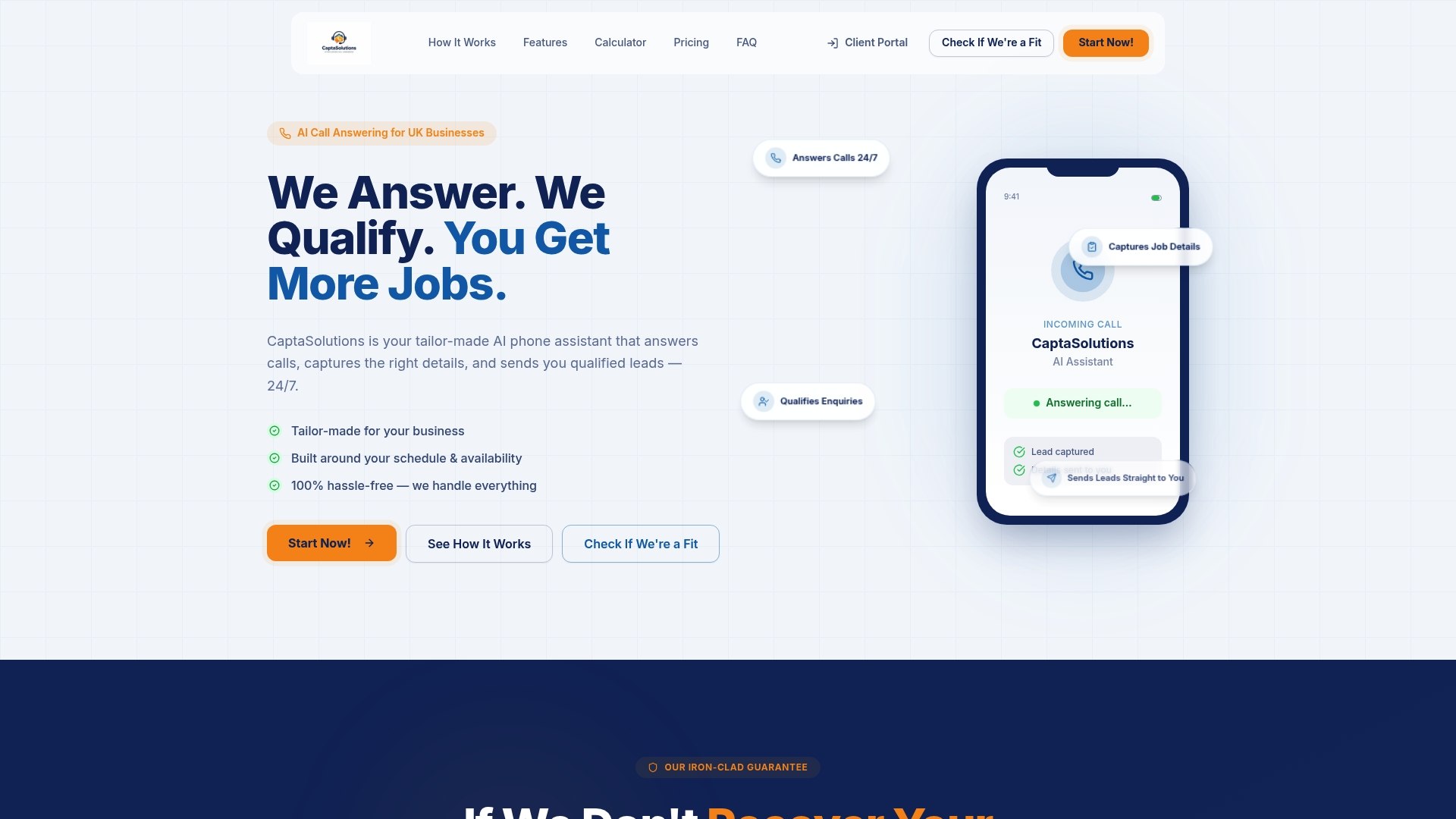
Captasolutions is an AI-powered call answering service that answers every call in your business name, 24 hours a day, 7 days a week. It captures caller details, qualifies the enquiry, and organises everything into your client portal. You review every lead and decide what to take on. There is no contract, no card required, and the service goes live within the hour. A free 30-day trial is available now at captasolutions.co.uk or by calling 07346 811329.
FAQ
What is a tradesperson call handling solution?
A tradesperson call handling solution is a service or system that answers incoming client calls on behalf of a tradesperson, captures job details, and passes qualified leads back to the tradesperson for follow-up.
Is an AI-powered service better than a live receptionist for trades?
AI-powered services offer lower cost and genuine 24/7 coverage, making them practical for most tradespeople. Live receptionists provide higher personalisation for complex enquiries but typically cost more and may not cover out-of-hours calls.
How quickly can I set up a call handling service?
Providers like Captasolutions can have a service live within the hour. The main preparation time involves writing your call script and configuring your call forwarding settings.
What information should my call script capture?
Your script should capture the caller's name, contact number, job type, location, urgency level, and preferred callback time. Tailored scripts that include trade-specific questions produce far better results than generic templates.
How do I handle urgent calls like emergencies?
Define escalation rules in your script that flag urgent call types, such as gas leaks or flooding, for immediate notification. Your answering service should contact you directly for these rather than logging them for a routine callback.